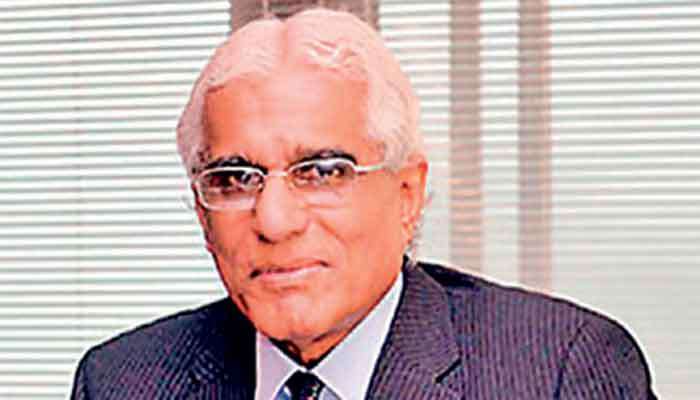
Former Central Bank of Sri Lanka (CBSL) Governor Dr. Indrajit Coomaraswamy has said the recent depreciation pressure on the rupee was driven primarily by external shocks stemming from the Middle East conflict, arguing that markets had overreacted despite a far stronger macroeconomic framework than in 2022.
Speaking to Insight News, Coomaraswamy said the current situation was “qualitatively different” from the 2022 economic collapse. He noted that reforms under the Public Finance Management Act, the Central Bank Act and cost-reflective pricing had hardened the policy environment, making the tax cuts, money-printing and unsustainable deficits that drove the earlier crisis no longer possible. “This is much more an externally induced set of developments,” he said.
He pointed to a transformed reserve position: usable reserves had risen from around $20 million at the time of the April 2022 debt standstill to roughly $5.3 billion now, excluding the People’s Bank of China swap. He acknowledged the external strain from oil, citing estimates that the Ceylon Petroleum Corporation’s monthly import bill had jumped to about $521 million in May from $152 million in December 2025.
Even so, he argued market behaviour had amplified the pressure. “I think importers have front-loaded imports. Exporters, I suspect, are delaying their conversions. And that has caused a liquidity problem in the foreign exchange market,” he said, adding that many participants were reacting to memories of 2022 rather than current realities. The rupee has since partially rebounded.
On inflation — which has accelerated from 2.2% to 5.4% — Coomaraswamy said it could approach the upper end of the CBSL’s 3%-7% target band if energy prices stay elevated, and that the Monetary Policy Board would weigh whether rate adjustments were needed. While defending targeted, time-bound fuel support as compatible with the IMF programme, he cautioned against broad import restrictions or administrative controls, warning they could erode investor confidence.