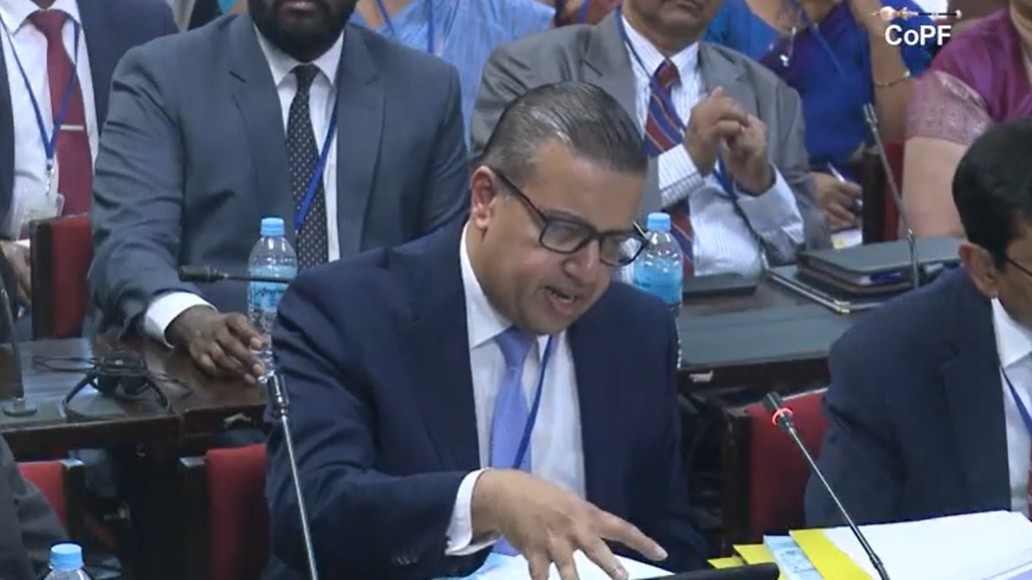
Sri Lanka’s current account will slip into deficit in 2026 for the first time in four years, Deputy Central Bank Governor Chandranath Amarasekara told Parliament’s Committee on Public Finance (COPF) on May 14, attributing the reversal to elevated oil import costs.
“We’ve had surpluses for three years. For this year, we are expecting a small deficit in the current account,” Amarasekara said. “If you look at current inflows and outflows, we are expecting outflows greater than inflows this year, mainly because of what is happening in the global economy and particularly with higher oil prices. Obviously, there will be a higher oil bill that we will have to face.”
The current account had recorded a $1.4 billion deficit at the depths of the 2022 financial crisis as foreign reserves drained and import controls tightened. A collapse in import demand and a rebound in tourism and worker remittances flipped the balance to a $1.43 billion surplus in 2023, followed by $1.21 billion in 2024 and $1.72 billion in 2025.
At the same COPF session, Central Bank Governor Nandalal Weerasinghe disclosed that the state-owned Ceylon Petroleum Corporation has spent nearly US$1 billion on oil in the first four months of 2026 — roughly two-thirds of its full 2025 bill of $1.5 billion. “This is only for CPC. The other two players are also buying. So the petroleum bill has significantly increased,” he said.
Global oil prices have climbed sharply since the Middle East escalation began on February 28, forcing Sri Lanka to absorb higher import costs despite fuel rationing and a Rs. 57 billion three-month subsidy approved to shield consumers from full-price pass-through.