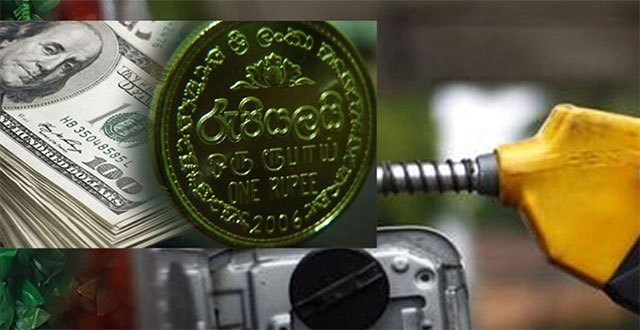
Economist Dhananath Fernando has called for Sri Lanka’s domestic fuel prices to be aligned with global market rates, arguing that broader economic reforms — and the fuel adjustment in particular — are essential to ease pressure on the Sri Lankan rupee and support macroeconomic stability.
Speaking to media, Fernando said maintaining fuel prices below international levels creates fiscal strain and distorts market mechanisms, ultimately increasing pressure on state finances and foreign exchange reserves. He acknowledged the unpopularity of price increases but described them as necessary given the strain currently on the currency.
Fernando explained that even a marginal rise in the US dollar exchange rate can trigger a chain reaction in the local market: exporters delay converting their foreign currency earnings while importers accelerate dollar purchases, amplifying demand pressure on the rupee.
Referring to recent currency volatility, Fernando said the rupee depreciated sharply on May 21 and 22 before recovering. He attributed part of the recovery to the Central Bank of Sri Lanka (CBSL), which he said had intervened during May by selling close to US$220 million in the market — effectively absorbing rupee liquidity. Official CBSL data released this month showed the regulator sold a net US$211.3 million in May (US$223.3mn gross), its second consecutive month as a net dollar seller after a 22-month buying run.
The remarks formalise the position Fernando first set out in May, when he warned that diesel sold at Rs.392 versus a Rs.409–410 import cost was a primary driver of dollar outflows estimated at US$200–500 million a month. Fuel accounts for roughly 23 per cent of Sri Lanka’s monthly import bill.
The rupee has continued to trade in a wide band against the dollar in recent sessions, with the CBSL’s reference rate moving between Rs.332 and Rs.342 in early June, reflecting the volatility Fernando described.
