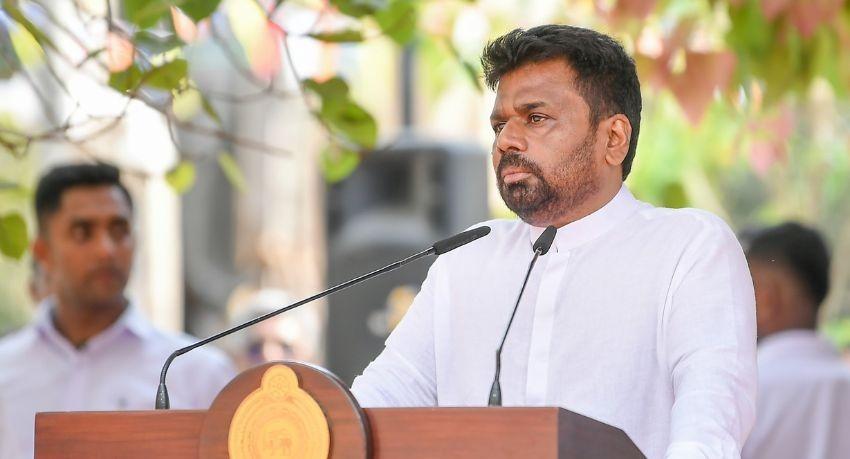
President Anura Kumara Dissanayake warned on Thursday that Sri Lanka’s ancient network of irrigation tanks is being eroded by encroachment, silt and damage inflicted by “powerful interests,” calling urgent rehabilitation of small and medium-scale tank systems “no longer optional, but a necessity.”
Speaking on seasonal water management, the President said Sri Lanka receives its heaviest rains with the onset of October and that properly capturing that water in reservoirs is critical to the Maha cultivation season. He said many tanks — from large reservoirs to small village wewas — had been encroached upon, their reservation zones destroyed and their beds filled with silt.
Dissanayake stressed that Sri Lanka’s irrigation heritage was never built around isolated tanks but as an interconnected cascade system in which water flows from one reservoir through paddy fields and drainage channels to feed the next, forming a vast network engineered for efficiency and sustainability. “While modern discussions often focus on sustainable development as a new concept,” he said, Sri Lanka’s traditional tank systems already represent “one of the most sustainable development models in practice.”
The President acknowledged that rehabilitation efforts could face resistance, but said the country must commit to safeguarding the system as a national asset underpinning food security and long-term resilience. He called on officials to protect tank networks so they could be passed on safely to future generations.
The warning comes as the Department of Meteorology has flagged a likely El Niño drought pattern through September, low reservoir levels at Castlereigh and Maussakelle are squeezing hydropower output, and the Ministry of Environment has just set up a new committee to gazette vital aquifers and oversee water conservation programmes.