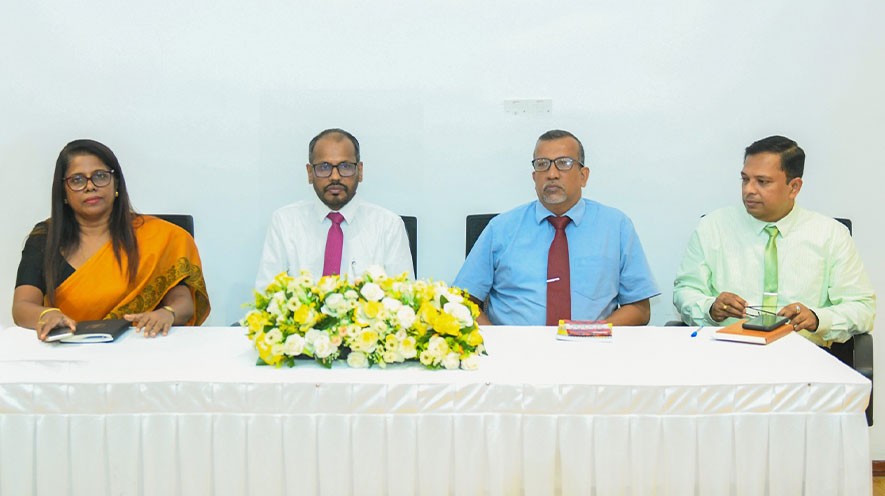
The Export Development Board is preparing to extend its product testing and certification network beyond Colombo to remove a long-standing bottleneck that has weighed on exporters in the North, East and South of the country, EDB Chairman Mangala Wijesinghe said.
Current testing capacity is heavily concentrated in the capital, forcing exporters from the outer provinces to ship samples to Colombo to meet buyer-country compliance requirements. The EDB plans to decentralise the network by modernising provincial-level state laboratories, making greater use of underused testing facilities and bringing in private operators through public-private partnerships, the trade body said.
The exporter community’s testing needs will be mapped against the capacity and roadmaps of existing service providers, the EDB added, with the certification process to be simplified through digital workflows. The plan emerged from a recent consultation between the EDB, government regulators, accredited testing laboratories, certification bodies and exporters.
“More practical and effective solutions will be discussed with higher authorities to better serve the exporter community island-wide,” the EDB said in a statement, adding that regulatory authorities and laboratory networks must work in close collaboration to support the national export agenda.
The decentralisation plan dovetails with the National Export Development Plan 2026–2030 approved by Cabinet last month and an Asian Development Bank-backed $100 million export-diversification programme. Sri Lanka recorded merchandise exports of US$1.38 billion in April — its strongest month of the year — with tea, apparel and rubber products leading.
Sources: EconomyNext.