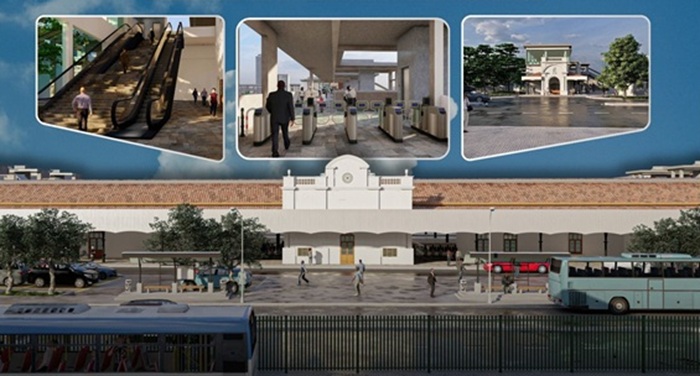
Colombo’s Fort Railway Station will undergo a Rs. 2.1 billion modernisation jointly funded by the Asian Development Bank and the Sri Lankan government, Transport Minister Bimal Rathnayake announced on Tuesday. The upgrade is scheduled for completion within 15 months.
The project was formally launched on Thursday, April 9, at a ceremony presided over by Prime Minister Dr. Harini Amarasuriya. “A country without a developed public transport system cannot be considered a developed nation,” the Prime Minister said, adding that the government aims to build a sustainable and inclusive system accessible to children, women, the elderly and persons with disabilities. The “Railway Efficiency Improvement Project” sits under the Ministry of Transport, Highways and Urban Development and is budgeted at more than Rs. 2,162 million.
The project targets passenger facilities and overall commuter convenience at one of South Asia’s busiest railway hubs, which serves as the southern terminus for the Northern, Coast, Main and Puttalam lines. Sri Lanka Railways carries roughly 300,000 passengers a day through Fort, the bulk during morning and evening peaks.
Specific details on which platforms, concourses or auxiliary buildings will be touched were not released at the announcement. The minister did not break down the contribution split between the ADB and Treasury or specify the contractor.
The Fort upgrade adds another item to a growing transport investment portfolio under Rathnayake, who signed a transport cooperation memorandum with Russia at the St. Petersburg International Forum earlier this month and is concurrently leading politically sensitive talks on Russian crude oil supply in his dual role overseeing energy procurement.
Fort station, opened in 1908 and last refurbished in stages during the 1990s, has long been criticised by commuters and tourism operators for crumbling platforms, inadequate signage and poor accessibility. A 2024 ADB scoping study identified the station as a priority node in any urban rail modernisation programme. The 15-month timeline points to completion in mid-2027.