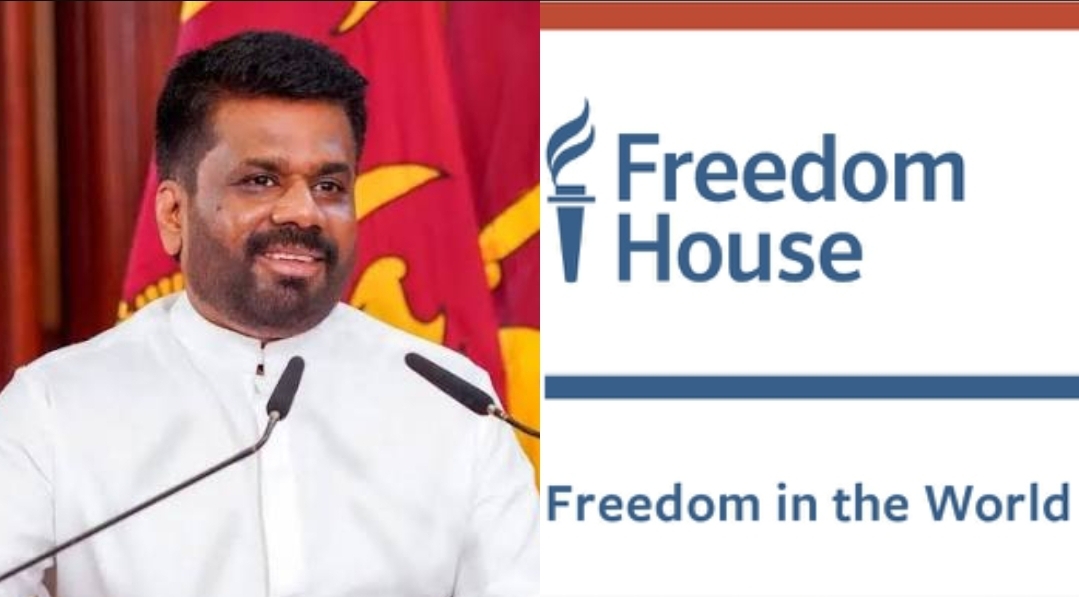
Sri Lanka recorded one of the largest democratic improvements worldwide in 2025, gaining four points to reach 58 out of 100 in Freedom House’s annual Freedom in the World report. The country remains classified as “Partly Free” but was one of just four nations — alongside Syria, Bolivia, and Gabon — to record the biggest gains globally.
Only 35 of the 189 countries and territories assessed showed any improvement at all, against a backdrop of global democratic decline for the 20th consecutive year.
What improved
Freedom House credited Sri Lanka’s gains primarily to the electoral process. The September 2024 presidential election — which brought leftist leader Anura Kumara Dissanayake and the NPP to power — was “deemed credible and transparent by international observers,” lifting the electoral process score from 3 to 4 points. The subsequent parliamentary elections similarly improved from 3 to 4 points for being “genuinely competitive and transparent.”
Government functioning also improved, with the score rising from 2 to 3 points as “the new president and Parliament were freely elected, duly installed in their posts, and able to form a government.”
The report also cited the government’s anti-corruption efforts and promotion of religious tolerance as contributing factors.
Persistent weaknesses
Despite the gains, Sri Lanka scored just 26 out of 40 on political rights and 32 out of 60 on civil liberties. Corruption safeguards, due process protections, and equal treatment provisions each scored only 1 out of 4 — indicating deep structural deficits that elections alone cannot fix.
Freedom of assembly and personal autonomy measures also remained weak at 2 out of 4.
The assessment covers a period before the current energy crisis and Trump tariff shock, both of which will test whether democratic institutions hold under renewed economic pressure.