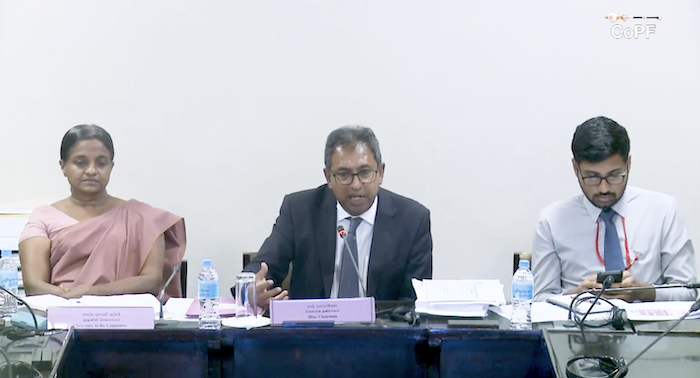
The Chair of the Committee on Public Finance, MP Dr. Harsha de Silva, has directed officials to appoint a regulator for online betting and casino platforms in Sri Lanka, citing the unchecked spread of advertisements during cricket telecasts and the absence of any licensing framework.
Speaking at a COPF session in Parliament on Tuesday, de Silva questioned how online casinos were being allowed to operate without licences or oversight, and noted that some platforms are using the Sri Lankan government logo in their promotions, claiming to be licensed operators. “Using the government’s logo they are telecasting online casinos for every ball in cricket matches. If no licence has been issued, then rewind and watch the last overs, you will see advertisements stating ‘licensed’ with the Sri Lanka logo. How is this happening? Who is approving this?” he asked.
The COPF Chairman warned that the absence of regulation was creating a “massive legal blind spot,” with billions of rupees in potential tax revenue slipping away from the state. He pressed officials to explain how online casino licences were being issued and, if no licences had been granted, why such advertisements were being allowed to continue unchecked, Newswire reported.
The COPF Chair’s intervention is the first formal parliamentary push for a dedicated online gambling regulator and adds a new revenue-side argument to the broader accountability cycle, alongside the committee’s separate scrutiny this week of Central Bank export-proceeds rules. Sri Lanka’s existing casino regulation framework, the Casino Business (Regulation) Act of 2010, covers physical casino floors but does not extend to the online and mobile betting platforms that have proliferated since.
Source: Harsha de Silva questions regulation of online betting platforms in Sri Lanka — Newswire, June 17.
Update — June 21: Government will tax online betting once sector is regulated, Deputy Minister says
Deputy Minister of Industries Chathuranga Abeysinghe said on Sunday that the government is considering introducing taxes on online betting activity in the near future, but only after the sector is “properly regulated.” The remarks, made in a statement shared via his social media account about the country’s current taxation framework, are the first explicit government commitment on the question of a betting tax since the COPF Chair’s intervention.
Abeysinghe pointed to the gambling industry regulation bill introduced last year — under which a regulatory authority is expected to be established and licensing rules implemented — as the sequencing precondition for any new tax. He also said the government plans to reduce indirect taxes on essential goods in the future, framing the prospective betting levy as part of a wider rebalancing of the tax base toward sectors that are currently untaxed.