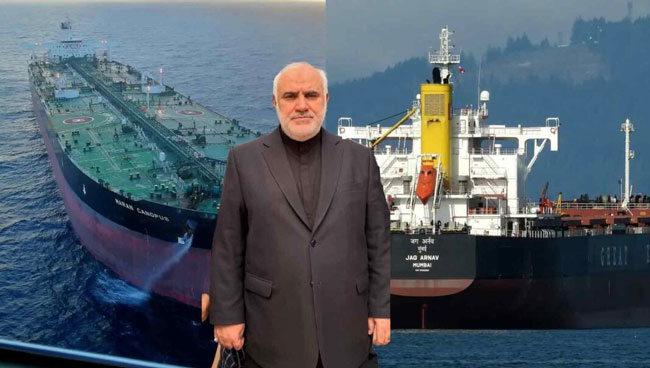
India on Saturday summoned Iran’s ambassador in New Delhi after two Indian-flagged vessels were forced to reverse course in the Strait of Hormuz following reports of gunfire from Iran’s Revolutionary Guard Corps (IRGC).
India’s Foreign Secretary conveyed New Delhi’s “deep concern at the shooting incident” to the Iranian envoy, the Ministry of External Affairs said. The statement reminded Tehran that Iran had previously facilitated safe passage of several India-bound ships and urged the ambassador to “convey India’s views to the authorities in Iran and resume at the earliest the process of facilitating India-bound ships across the Strait.”
The UK Maritime Trade Operations (UKMTO) reported two IRGC gunboats opened fire on a tanker transiting the strait earlier in the day. A second vessel — a container ship 25 nautical miles northeast of Oman — was struck by an unknown projectile, damaging containers. In a third incident, the master of a cruise ship reported sighting a splash close to the vessel.
No crew injuries were reported. The incidents unfolded as the IRGC simultaneously reimposed “strict management” of the waterway, reversing Foreign Minister Abbas Araghchi’s declaration that Hormuz was “completely open.”
India’s move is the first formal diplomatic action by a major Asian oil-importing nation in the current Hormuz standoff. New Delhi is one of Iran’s largest oil buyers and a key maritime partner, making the summons a qualitatively new escalation beyond earlier Western statements.
For Sri Lanka, the deterioration adds pressure to the India-routed fuel supply chain that has carried the island through April. The diplomatic rupture between two neighbouring Indian Ocean powers threatens the logistical assumptions underpinning Colombo’s fuel outlook ahead of Trump’s ceasefire deadline on Wednesday.