The International Organisation for Migration (IOM) has formally concluded its cash-based intervention for Cyclone Ditwah survivors, delivering financial assistance to more than 4,000 families across seven districts, the agency said in a release reported by The Island.
The closing ceremony was held in Puttalam District in the presence of district officials, UN and IOM representatives, community leaders and beneficiaries. The programme was funded by the United Nations Central Emergency Relief Fund (CERF), coordinated with the Government of Sri Lanka and implemented in partnership with the Sri Lanka Red Cross. Cash was distributed to families in Puttalam, Badulla, Jaffna, Batticaloa, Nuwara Eliya, Kegalle and Kandy whose homes were damaged by the cyclone, to support repairs and the purchase of essential household items.
The cash transfer sat within the broader UN Humanitarian Priorities Plan (HPP), which formally closed at the end of April after running for five months across 25 districts and 81 partners. Under HPP, IOM distributed over 4,700 essential non-food items to families at 60 locations and co-led the Shelter, Land and Site Coordination Cluster alongside the IFRC.
“This cash-based intervention is one important component of the multi-sectoral response set out in the Humanitarian Priorities Plan, through which the UN and its partners are supporting recovery across shelter, food security, health, protection and beyond,” said UN Resident Coordinator Marc-André Franche. “As climate-related hazards grow in frequency and intensity, this kind of coordinated action is essential to saving lives and building resilience.”
“IOM is pleased to help affected families meet their most urgent needs,” said Kristin Parco, IOM Chief of Mission for Sri Lanka and the Maldives. “This support empowers families with the flexibility and dignity to spend according to their priorities as they rebuild their homes and lives.”
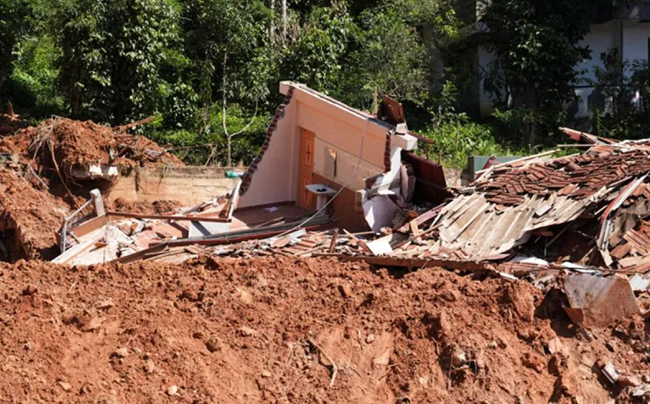
Cyclone Ditwah made landfall on November 28, 2025, triggering some of the worst flooding and landslides Sri Lanka has experienced in two decades. The disaster affected nearly 2.2 million people across all 25 districts, with roughly 290,000 individuals displaced at peak according to IOM’s Displacement Tracking Matrix. Government reconstruction and housing payments are still being rolled out under a year-end completion target.