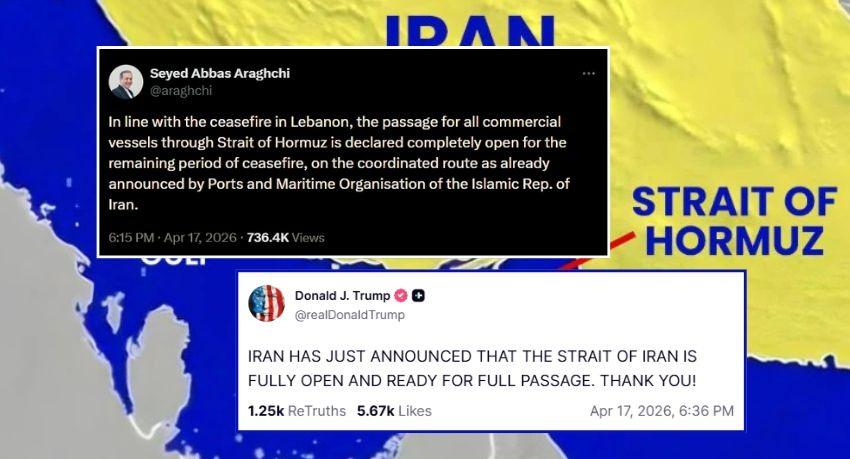
Iran has declared the Strait of Hormuz “completely open” for all commercial vessels, marking the most significant de-escalation in the waterway since the April 8 ceasefire began.
Araghchi’s announcement
Foreign Minister Abbas Araghchi confirmed that the passage is now open for the remaining period of the ceasefire along the coordinated route already designated by Iran’s Ports and Maritime Organisation. The declaration covers all commercial shipping — a major shift from the controlled opening and inspection regime Iran had been enforcing since the ceasefire took effect.
US President Donald Trump responded with “thank you” on Truth Social, signalling acceptance of the arrangement.
Oil markets react sharply
Global oil prices dropped sharply on the news. Brent crude fell approximately 8.5% to around $90.93 per barrel, while West Texas Intermediate (WTI) declined about 9.4% to $85.82. The plunge represents the largest single-day oil price drop since the ceasefire was first announced on April 8.
Implications for Sri Lanka
The price collapse offers significant relief for Sri Lanka, which has been grappling with elevated fuel import costs since the Middle East crisis began. The country’s petroleum import bill had surged as Brent remained above $100 per barrel for much of April, straining foreign reserves and prompting fuel rationing measures including QR-based restrictions.
The development supersedes earlier signals from Iran’s Deputy Foreign Minister Khatibzadeh, who had rejected temporary ceasefire arrangements at the Antalya Forum just hours earlier and demanded comprehensive regional peace before any permanent reopening.
Whether the opening holds beyond the ceasefire period remains the critical question, with Iran’s war compensation demands still unresolved.