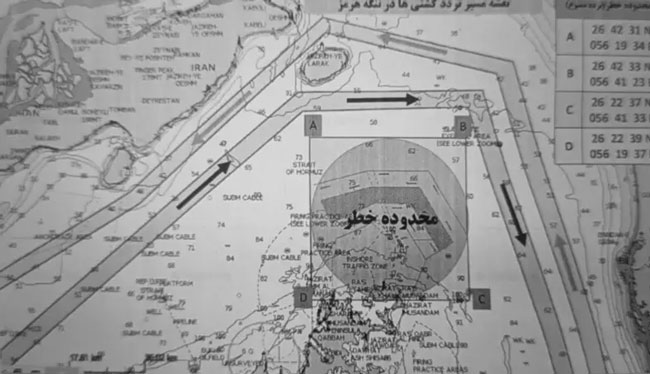
Iran’s Islamic Revolutionary Guard Corps has issued navigation instructions telling vessels how to avoid sea mines in the Strait of Hormuz, a tacit confirmation that the world’s most important oil chokepoint remains partially obstructed despite the April 8 ceasefire.
According to the IRGC statement carried by BBC and wire agencies, ships sailing from the Sea of Oman into the Persian Gulf should pass north of Larak Island, while vessels exiting the Persian Gulf into the Sea of Oman should pass south of the same island. The advisory amounts to an official acknowledgement that mines laid during the height of the US-Iran confrontation have not yet been cleared.
The guidance follows Iran’s earlier position that the Strait would reopen “under Iranian control” rather than immediately and fully. Iranian officials have also insisted that Gulf cargo movements continue to require declaration to Tehran, and transit fees are now being discussed with Oman as part of a broader mechanism governing traffic through the waterway.
Standard Chartered analysts said in a note circulated Thursday that “transit through the Strait of Hormuz is not suddenly risk-free” and that passage “remains at Iran’s discretion.” The shipping warning is expected to keep refined-product insurance premiums elevated even as benchmark crude prices ease from the peaks reached during last week’s confrontation.
For Sri Lanka, the partial reopening still allows tankers bound for Colombo to move through the Gulf but under heightened risk, with insurers likely to price in the mine hazard. The Ministry of Energy is tracking nine planned April shipments against the revised Hormuz rules.