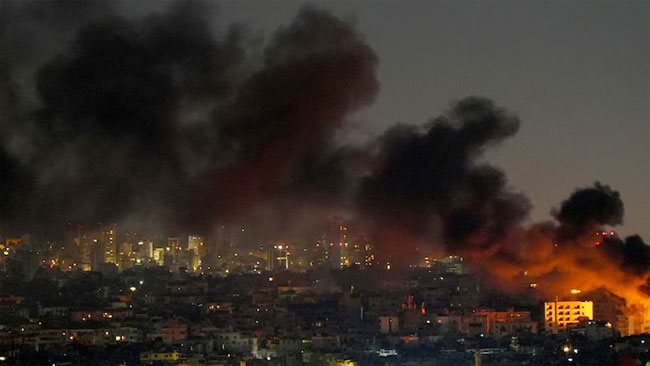
Israel struck Beirut on Wednesday (May 6) for the first time since agreeing to a ceasefire with Hezbollah on April 16, with the Israeli government saying it had targeted a senior commander of the militant group’s elite Radwan force in the city’s southern suburbs.
Prime Minister Benjamin Netanyahu and Defence Minister Israel Katz announced the action in a joint statement. Israeli media reported the commander was killed; there was no immediate confirmation from the Israeli military or Hezbollah. Images posted online showed extensive damage near the building hit in the Dahieh area.
The strike threatens to unravel a ceasefire framework that has underpinned the broader US-Iran truce, with a halt to Israeli operations in Lebanon being a key Iranian demand. Hezbollah responded by firing rockets and launching armed drones toward Israeli soldiers in southern Lebanon. The Israeli military said two of its soldiers were injured and that it had intercepted a hostile aircraft before it crossed into Israel, while striking Hezbollah infrastructure in several areas.
Earlier on Wednesday, Israel called for residents to evacuate several villages north of the Litani River — a potential expansion of its zone of action. Lebanon’s Health Ministry said an Israeli airstrike killed four people, including two women and an elderly man, in the southern town of Zelaya.
Lebanese Prime Minister Nawaf Salam said it was premature to discuss a high-level meeting between Lebanon and Israel. Shoring up the ceasefire would be the basis for any new negotiations between the two governments’ envoys in Washington, he said. “Our minimum demand is a timetable for Israel’s withdrawal,” Salam said, adding that Lebanon was not seeking “normalisation with Israel, but rather achieving peace”. President Joseph Aoun said this week the timing was not right for a Netanyahu meeting until “a security agreement and a halt to the Israeli attacks” were reached.
Announcing a three-week extension to the ceasefire on April 23, US President Donald Trump said he saw “a great chance” the countries could reach a peace deal this year. Washington has so far hosted two ambassador-level meetings between Israel and Lebanon, contacts Hezbollah strongly opposes.
Israeli forces have maintained a self-declared security zone extending up to 10km into southern Lebanon. More than 2,700 people have been killed in the war in Lebanon since Hezbollah opened fire in support of Iran on March 2, the Lebanese Health Ministry says. Israel says Hezbollah has fired hundreds of rockets and drones at Israel since then; 17 Israeli soldiers and two civilians in northern Israel have been killed.
Sources: Ada Derana, BBC.