King Charles III urged the United States on Tuesday to stand firm with its Western allies, warning that strains over Iran and Ukraine risk undermining transatlantic ties facing their most serious test in years. The speech came on a day when US President Trump described Iran as being in a “state of collapse” and expressed frustration with Tehran’s latest war-resolution proposal.
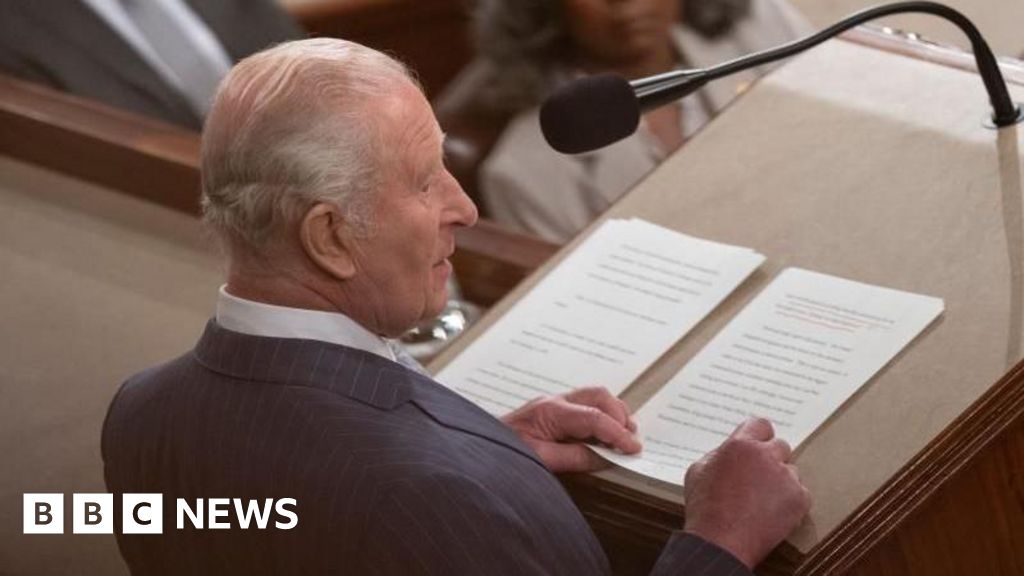
The address to a joint session of Congress was the first by a sitting British monarch since Queen Elizabeth II in 1991. Speaking to lawmakers in the House chamber with Vice President JD Vance and Speaker Mike Johnson seated behind him, the King opened by acknowledging “times of great uncertainty” confronting both nations.
He referenced conflicts in the Middle East and Europe alongside the political violence that disrupted the White House Correspondents’ Dinner over the weekend. The King argued that the United States and the United Kingdom, when in alignment, can do great things “not just for the benefit of our peoples, but of all peoples”.
A passage on the British legal tradition enshrined in the Magna Carta, where “executive power is subject to checks and balances”, drew a standing ovation that began on the Democratic side of the chamber before spreading. The line landed amid the “no kings” protest movement that has drawn hundreds of thousands of Americans opposed to what critics describe as President Donald Trump’s expansion of executive power.
The King quoted former US Secretary of State Henry Kissinger on the Atlantic partnership and noted that NATO has mobilised in defence of one of its members only once — after the September 11, 2001 al-Qaeda attacks on the United States. He referenced his own five years of Royal Navy service while remarking on the value of intelligence and security cooperation between the two countries.
The speech included no direct reference to the Jeffrey Epstein investigation or its victims. The closest the King came was an oblique mention of “victims of some of the ills that, so tragically, exist in both our societies today”.