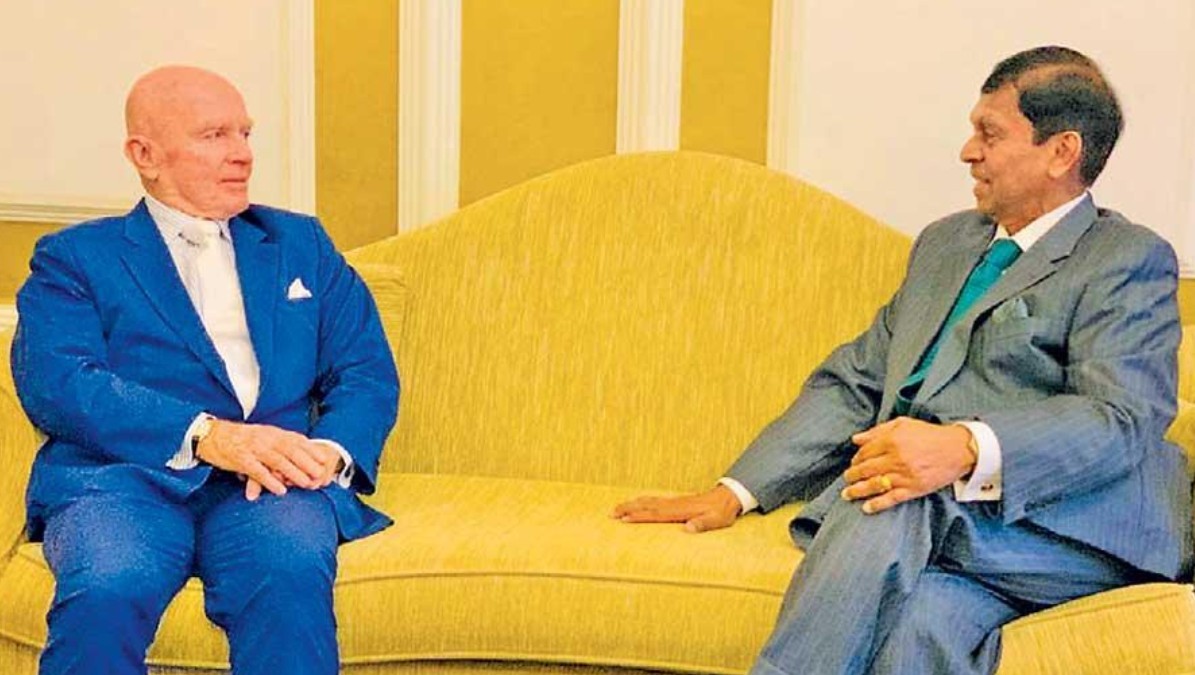
Mark Mobius, the emerging markets pioneer who became Sri Lanka’s most important foreign investor in the fragile years after the end of the civil war, has died at the age of 89.
Mobius’s death was announced on his LinkedIn page on Wednesday. No cause of death was given.
Through the Templeton Emerging Markets Group, Mobius orchestrated one of the most significant votes of confidence in Sri Lanka’s financial history, aggressively purchasing Sri Lankan Treasury bonds in the months after the war ended in May 2009. At its peak, Templeton held approximately US$800 million in Sri Lankan government securities, according to EconomyNext.
The position was, in effect, an institutional seal of approval at a time when much of the Western investor community remained wary of Sri Lanka amid human rights allegations. It paired with a US$2.6 billion IMF Stand-By Arrangement agreed the same year to pull the island back from a balance-of-payments crisis and helped draw billions of dollars into frontier markets once dismissed as peripheral.
Mobius worked closely with then-Central Bank Governor Ajith Nivard Cabraal, whose strategy rested on infrastructure-led foreign inflows and a managed rupee peg. “I think we’re pretty much over the big devaluation of the currency,” Mobius remarked in one of his Colombo interviews at the time. “Looking forward, it’s about the implementation of reforms. The currency will probably stabilize.”
A frequent visitor to Colombo and a confident voice on frontier opportunities — from Sri Lanka to Venezuela, where he continued to publish contrarian views as recently as January — Mobius built a generation-spanning reputation by arguing that “volatility is not an enemy to fear but a sign that opportunity is close at hand.”
Over a long career he authored books including Passport to Profits and The Little Book of Emerging Markets, insisting that markets are best read through their people rather than their balance sheets alone.