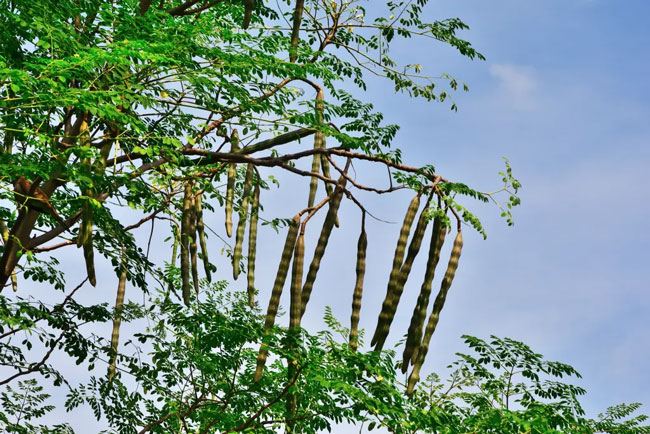
Extracts from moringa seeds — long prized in Sri Lanka and South Asia for the tree’s medicinal and nutritional value — can remove 98.5% of PVC microplastics from drinking water, according to research by scientists from Brazil and the United Kingdom published this month.
The study, led by Adriano Gonçalves dos Reis of the Institute of Science and Technology of São Paulo State University, focused on PVC microplastics, which the researchers describe as among the most hazardous types and prevalent in tap water. Tested particles averaged 18.8 micrometres — about a quarter of the thickness of a human hair. Seed extracts performed roughly on par with aluminium sulphate, a widely used chemical coagulant, and outperformed it in more alkaline water.
Gonçalves dos Reis said moringa seeds offer several advantages over aluminium-based filtration: they are renewable and biodegradable, generate less sludge and avoid the toxicity concerns linked to aluminium, which has been associated with neurodegenerative disease at high exposures.
Matthew Campen, a professor at the University of New Mexico Health Sciences Center who was not involved in the study, said using a natural product instead of an aluminium-based filtration system “may offer a cheaper and more sustainable solution to removal of PVC microplastics” and could reduce demand for aluminium mining.
The team flagged limitations: a single moringa seed treats about 10 litres of water, meaning industrial-scale plants would require very large quantities. The researchers see the strongest potential in small communities and locations where access to chemical coagulants is limited — a description that fits many rural Sri Lankan settings where moringa is already cultivated for its leaves and pods.
A 2024 study cited in the research found microplastics in 83% of tap water sampled worldwide. Moringa has been used as a water-purifying coagulant since antiquity, with documented use by ancient Greeks, Romans and Egyptians.
Source: Ada Derana.