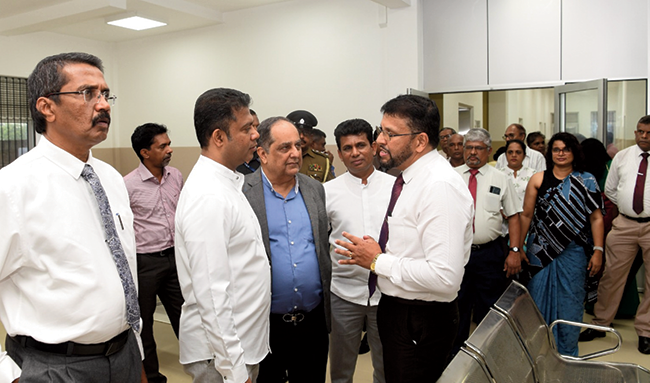
Nearly one in five Sri Lankans is now living with some form of non-communicable disease (NCD), Health and Media Minister Dr. Nalinda Jayatissa said on Thursday, calling the trend a serious challenge to the country’s public health system.
Speaking at the inauguration of a new four-storey ward complex at the Kalutara Ayurvedic Base Hospital, Dr. Jayatissa said the estimate — covering all age groups from children to the elderly — was confirmed in a 2024 report by the Department of Census and Statistics. He warned that the scale of the disease burden required stronger national interventions.
The minister noted that around 80% of hospital admissions and deaths in Sri Lanka are now linked to NCDs such as cardiovascular disease, diabetes and cancers — broadly consistent with the 83% NCD-attributable mortality figure earlier highlighted by the Health Ministry. He said multiple government programmes were already under way to address the rising load on hospitals and primary care.
The new Rs.250 million complex at the Kalutara hospital, funded by the Western Provincial Council, comprises an outpatient department, male and female general wards, paying wards, an administrative section, an auditorium, staff rest rooms and a doctors’ residence, with a total capacity of 50 beds. The facility serves patients from areas including Vidiyagoda, Horana and Bandaragama, the minister said, and is expected to expand its catchment further in coming years.
Western Province Governor Hanif Yusoof, Kalutara District MP Nandana Padmakumara, District Secretary S.P. Herath and provincial health officials attended the event, alongside medical staff and residents from the surrounding area, The Island reported.
The Vidiyagoda Ayurvedic Hospital — the institution that the Kalutara base complex grew from — was originally established on 29 October 1992, and upgraded in 1998 to a government Ayurvedic hospital. Dr. Jayatissa said the hospital had evolved through the support of successive administrations into a substantive regional Ayurvedic facility, and described the new complex as a step towards better integrating indigenous medical services into Sri Lanka’s mainstream healthcare network.
Source: The Island.