Port City Colombo has secured approximately $900 million in investments between November 2025 and March 2026, the largest surge since the 269-hectare special economic zone opened for business, according to CHEC Port City Colombo Deputy Managing Director Thulci Aluwihare.
Speaking to Daily FT, Aluwihare said the project is finally attracting a new category of foreign direct investment after years of stalled momentum caused by the Easter Sunday attacks, the COVID-19 pandemic and Sri Lanka’s 2022 economic collapse. International marketing only began to gain traction in late 2025 as macroeconomic conditions stabilised.
“The macro story had to align first,” he said. “You cannot market a country when the fundamentals are unstable. Now, we are seeing recovery, policy alignment, and growing confidence.”
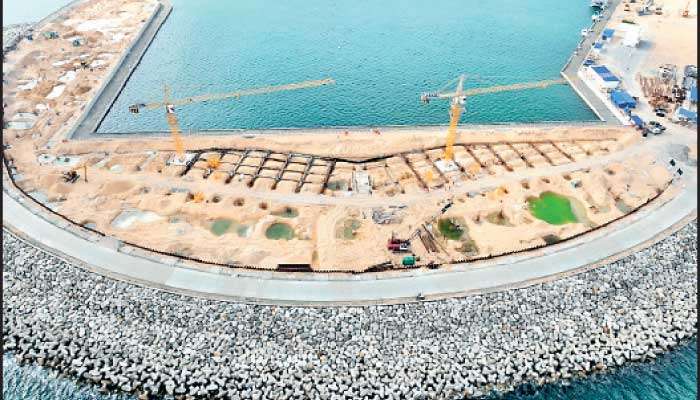
Nearly 200 companies are now registered inside the zone. Roughly half are in IT and IT-enabled services, while around 30% fall within financial services, professional services and trading. Although Port City’s physical commercial space is still under construction, over one million square feet of office space in Colombo city is already occupied by Port City-linked entities operating under the zone’s licensing regime.
The structural pitch to investors rests on the Colombo Port City Economic Commission Act, which turned the development from a waterfront real estate project into a ring-fenced services-export zone. Companies operate entirely in US dollars, eliminating exchange-rate risk on the Sri Lankan rupee. The zone offers 100% foreign ownership, unrestricted foreign talent hiring and long-term residency visas of five to ten years. Licences can be issued within seven days and visas within five, allowing companies to establish operations remotely without entering Sri Lanka.
Aluwihare said the zone’s regulatory architecture draws from the Dubai International Financial Centre, Abu Dhabi Global Market, Labuan and Singapore, but positions Colombo as a complement rather than a competitor — a lower-cost, regionally accessible hub aimed at businesses serving India and wider South Asia.
Post-ceasefire Gulf investor interest has emerged as a fresh driver, with some Dubai-based firms diversifying risk amid Middle East instability. CHEC projects a $15 billion long-term investment pipeline and an eventual $13 billion annual contribution to GDP if the current momentum holds.