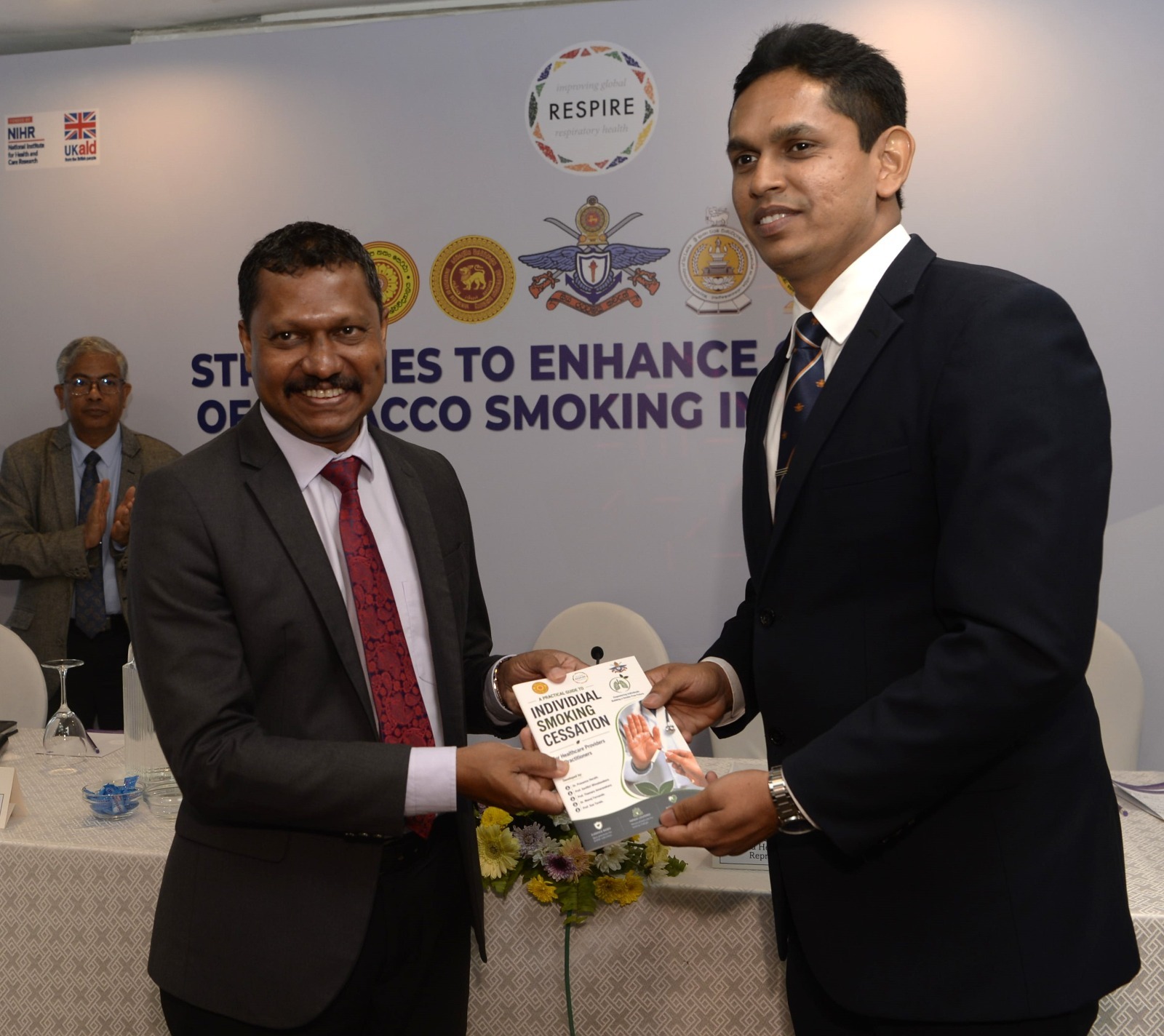
Sri Lanka has formally joined the global “Respire” health initiative on smoking cessation, with Deputy Health Minister Hansaka Wijemuni framing tobacco control as a national development priority at a launch event in Colombo on Friday.
Universities, clinicians, policymakers and international partners attended the briefing, which focused on strengthening evidence-based smoking-cessation services and tobacco-control policy in the country. Five Sri Lankan universities are partnering on the programme: the University of Sri Jayewardenepura, the University of Peradeniya, the University of Jaffna, Wayamba University of Sri Lanka and General Sir John Kotelawala Defence University.
“Reducing tobacco consumption is not only a health objective but also a national development priority,” Wijemuni said, warning that tobacco-related illnesses continue to place a heavy burden on Sri Lanka’s healthcare system, economy and families. Experts at the event called for stronger tobacco-control policies and coordinated action to shield future generations from addiction.
The launch comes against the backdrop of a sustained public-health debate over Sri Lanka’s tobacco regime. The Institute of Policy Studies has previously estimated that more than 12,300 Sri Lankans die each year from tobacco-related causes, and recently urged the Treasury to use higher excise taxes as the single most cost-effective intervention. Industry voices have pushed back on parts of the policy mix: in early May the tourism trade opposed the proposed ban on e-cigarettes, and Ceylon Tobacco Company appointed Sarmad Abbasi as its new managing director the same week.
The Respire engagement also slots into a wider non-communicable-disease push by the Health Ministry, with the Director-General of Health Services noting earlier on Friday that one in five Sri Lankans now lives with a non-communicable disease — conditions in which tobacco is a leading risk factor.
The Newswire report did not specify the international funder or coordinating body behind Respire, the cessation tools that will be deployed in the partner universities, or a timeline for measurable outcomes.