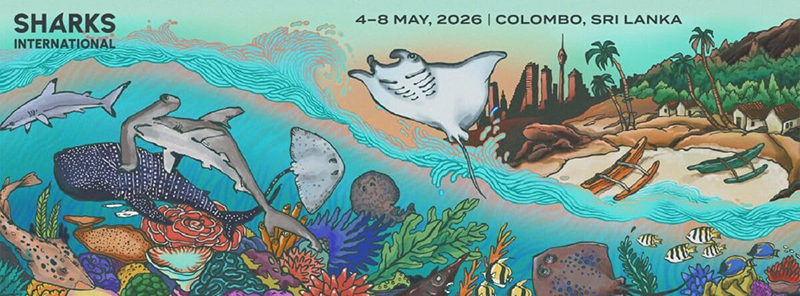
Sharks International 2026 (SI2026), described as the world’s largest shark and ray conservation conference, opened in Colombo today, placing Sri Lanka at the centre of global efforts to halt the rapid decline of elasmobranch populations.
The conference focuses on halting population declines, reducing bycatch in industrial and artisanal fisheries, strengthening monitoring and enforcement systems, and expanding marine protected areas and migratory corridors. Organisers expect leading marine biologists, shark ecologists, conservation organisations, fisheries managers and government regulators, with strong regional participation from South Asia, Southeast Asia and the wider Indian Ocean rim.
Daniel Fernando, co-founder of the Blue Resources Trust (BRT), said the timing is critical for a region that is both a global biodiversity hotspot and one of the most heavily exploited for shark fishing. He said the conference also aims to challenge the perception that data from South Asia is lacking, arguing the issue is limited representation at global forums due to financial constraints and visa barriers. Organisers introduced registration subsidies and a record number of travel grants to lift participation from developing nations.
Sri Lanka hosts approximately 105 recorded species of sharks and rays, including reef sharks, whale sharks, hammerheads and manta rays, with recent surveys indicating greater diversity. Conservation concerns are acute: nearly one-third of shark and ray species globally face extinction, sawfishes are considered locally extinct in Sri Lankan waters, and wedgefishes and guitarfishes are believed to be in similar decline. Despite this, only five species currently receive legal protection.
The challenge for SI2026, Fernando said, is translating scientific knowledge into effective conservation action at sea, “at a time when both the urgency and the tools to protect shark populations have never been greater.”
Source: The Island.