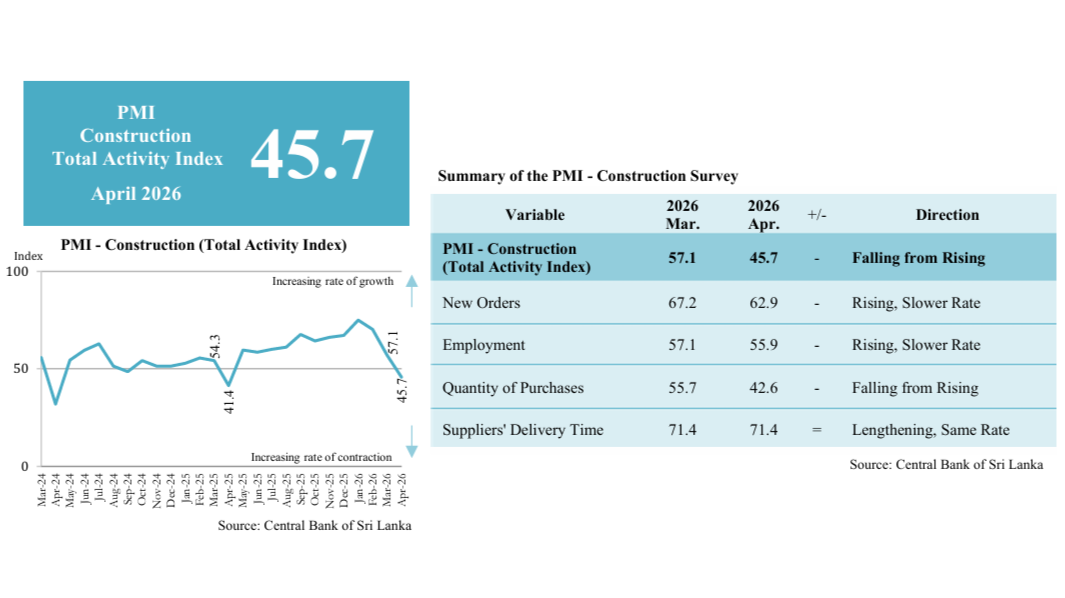
Sri Lanka’s construction sector contracted in April 2026, with the Purchasing Managers’ Index dropping to 45.7 amid rising raw material costs and skilled labour shortages, the Central Bank said in its monthly survey reported by EconomyNext on Saturday.
A PMI reading below 50 signals overall contraction. April’s print is the first sub-50 month after February’s expansion of 57.1 and March’s slowing reading for the sector, which had been buoyed earlier in the year by post-cyclone rebuilding and road rehabilitation.
“Many survey respondents cited input shortages, particularly of petrochemical-based raw materials, and rising costs stemming from the conflict in the Middle East as challenges to the timely execution of planned work,” the central bank said.
Sub-indices showed a divided sector. The New Orders Index expanded but eased to 62.9 from 67.2 in March, reflecting continued availability of projects, especially road rehabilitation. “However, several respondents indicated that some new projects could face delays as rising raw material costs may require price renegotiations,” the central bank said.
The Employment Index expanded at 55.9 from 57.1, with firms still recruiting in response to project pipelines. But many highlighted “shortages across most skilled labour categories.” The Quantity of Purchases Index slid into contraction at 42.6 from 55.7, tracking lower levels of construction activity, and the Suppliers’ Delivery Time continued to lengthen during the month.
The contraction reading lands alongside a current account that slipped to deficit in April on a wider trade gap and surging fuel import bill, all traceable to the same West Asia disruption that has pushed up freight, petrochemical input and crude prices.