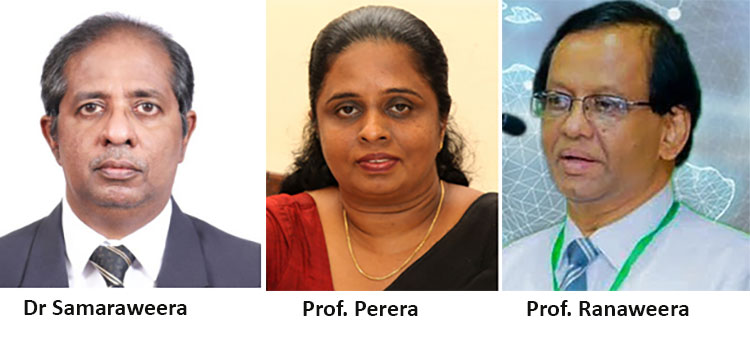
Sri Lankan scientists have warned that households, restaurants, hospitals and farms are discarding large quantities of food daily even as food insecurity and the cost of living continue to weigh on the country. The findings were presented at a forum hosted by the National Science Foundation’s Media and Event Management Division at the NSF auditorium in Colombo last week.
Emeritus Professor K.K.D.S. Ranaweera told the forum that, citing the United Nations Environment Programme Food Waste Index Report 2021, Sri Lankan households alone generate more than 1.6 million tonnes of food waste annually. Urban households waste more than Rs. 1,000 worth of food each week, with the average family discarding around 34 kilograms of food in the same period.
The losses begin before food reaches markets. Wild animals — peacocks, monkeys, wild boars and elephants — inflict annual agricultural damage estimated at between Rs. 17 billion and Rs. 20 billion, destroying close to 31,000 metric tonnes of fruits and vegetables each year before harvest. Government statistics presented at the forum show that 19% of vegetables (221,955 tonnes) and 21% of fruits (290,151 tonnes) are wasted annually due to poor harvesting practices, rough transportation, delays, improper handling and inadequate cold storage.
Restaurants in the Colombo district alone discard nearly 110 tonnes of food daily, Prof. Ranaweera said. Lavish weddings and large social gatherings, where food is routinely over-served, were described as a culturally entrenched contributor to the problem. Hospitals, too, were identified as significant generators of waste, with a single national hospital producing between one and four metric tonnes a day — partly because visitors bring multiple meal packets for patients that ultimately end up in bins.
Forum participants warned that almost half of the solid waste generated in the Western Province, much of it from the Colombo district, is food waste, placing severe pressure on already overburdened waste management systems.
The forum also featured presentations by Emeritus Professor Buddhi Marambe, Prof. Renuka Silva and Dr. Hiranya Jayawickrema. NSF Chairman Dr. Sudath Samaraweera and Director General Prof. Shiromi Perera were present. The scientists urged urgent measures to curb wastage, strengthen storage and transport systems, and shift public attitudes towards food consumption — warning that without action, Sri Lanka could face a deepening food security crisis even as edible food is dumped daily.
Source: The Island.