Sri Lanka’s long-discussed electricity grid connection with India is gaining renewed momentum as the Asian Development Bank (ADB) intensifies its push for cross-border energy integration across the region.
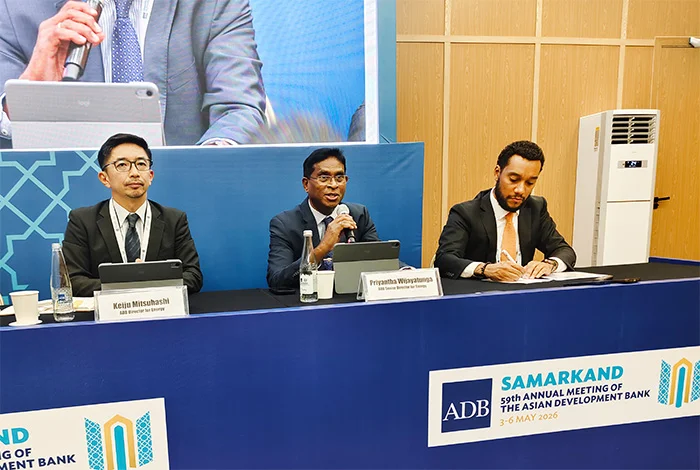
Speaking at the ADB Annual Meetings in Samarkand, Uzbekistan, ADB Senior Director for Energy Priyantha Wijayatunga identified the proposed India–Sri Lanka grid interconnection as “the most promising avenue” to strengthen the island’s power sector. The concept dates back to the 1970s, when Sri Lanka briefly explored exporting electricity following the Mahaweli Development Project. Rapid economic growth and rising domestic demand later turned the country into an energy importer.
“The time is right,” Wijayatunga said, stressing that political will and financing will be decisive. While undersea transmission cables make the link technically viable, costs remain a major challenge. The ADB stands ready to support Sri Lanka as a development partner in advancing the project, he confirmed.
The proposal is tied to the ADB’s broader Pan-Asia Power Grid Initiative (PAGI), which aims to connect national grids into subregional and eventually continent-wide networks. PAGI is designed as a systems-level integration platform that promotes cross-border electricity trade, enhances energy security, and integrates large-scale renewable energy. ADB estimates the initiative could mobilise up to $50 billion in investments by 2035.
For Sri Lanka, integration would allow electricity imports during shortages, stabilise supply, and support a transition to cleaner energy. The link would also let the country tap regional resource complementarity — hydropower in Nepal and Bhutan, solar and wind potential in India.
The renewed focus on regional connectivity comes as Sri Lanka pushes domestic grid stabilisation through battery storage and software fixes and works through chronically low hydropower output as Castlereigh and Maussakelle reservoirs draw down.
Reported by Sanath Nanayakkare from Samarkand for The Island.
Source: The Island — May 6, 2026.