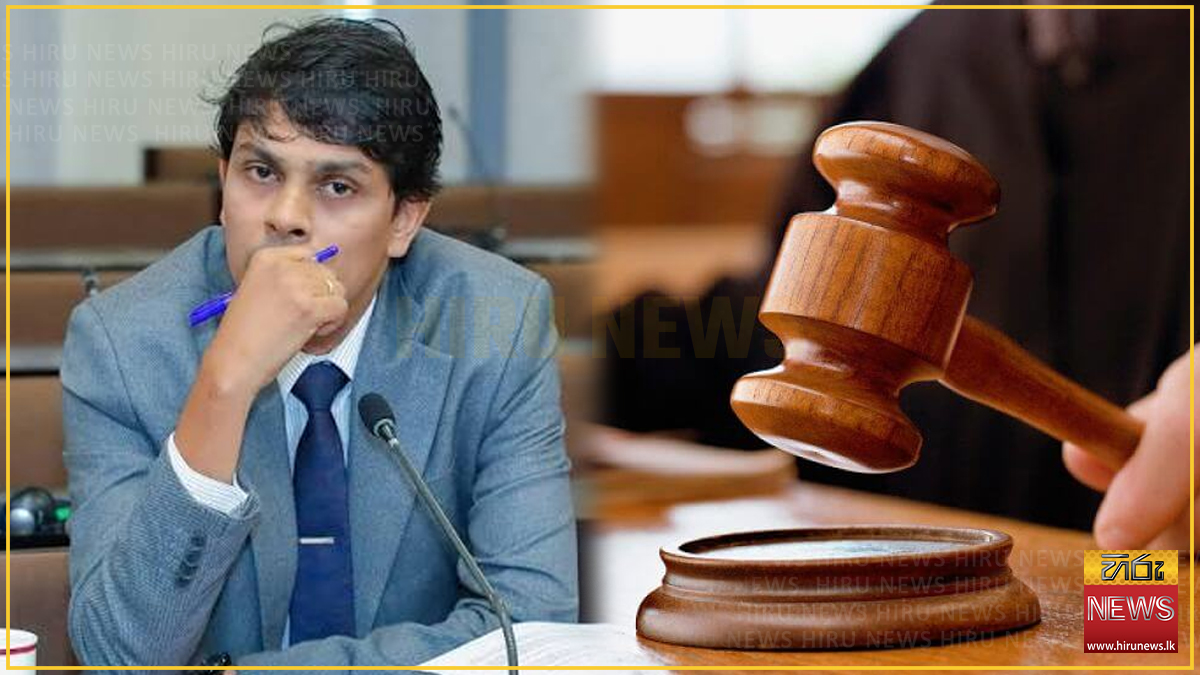
The Colombo Fort Magistrate’s Court on Wednesday directed the Criminal Investigation Department to present its submissions on the mental health condition of former State Intelligence Service Director Major General (Retd.) Suresh Sallay, who is being held in CID custody under detention orders in the Easter Sunday attacks investigation.
Magistrate Pasan Amarasena issued the order after President’s Counsel Shavindra Fernando, appearing for Sallay, filed a motion challenging the continuation of proceedings against his client. NewsFirst reported that the legal team told the court Sallay had been examined by a Judicial Medical Officer, whose report confirms he is currently suffering from post-traumatic stress disorder (PTSD), severe mental stress and depression — and that the medical findings indicate he may be at risk of self-harm or suicide.
The President’s Counsel told the court that the medical report also indicates Sallay had allegedly been subjected to torture at five different locations, and that the alleged incidents contributed to his deteriorating psychological condition. His legal team requested that he be placed in an environment suitable for psychiatric treatment.
The Magistrate said a ruling could not be made without first hearing the position of the complainant party, and accordingly directed the CID to respond. Notices were issued to the CID officer-in-charge to appear, and the case has been re-fixed for June 4. Sallay has been named as the third suspect in the Easter Sunday investigation.
At the June 4 hearing, the Colombo Fort Magistrate’s Court said it would deliver its order on June 10 on a parallel request by the Attorney General — that the Director General of Health Services be directed to refer Sallay, currently being detained under the Prevention of Terrorism Act (PTA), to a specialist medical board for an assessment, Ada Derana reported. After hearing submissions from Additional Solicitor General Dileepa Peiris, the court decided to issue its ruling on the matter on June 10.
At the June 4 hearing the Attorney General’s department pushed back forcefully. Additional Solicitor General Dileepa Peiris told the court no reasonable evidence had been produced to show Sallay was suffering from any serious medical condition, NewsFirst reported. He noted Sallay had been referred to a nutritionist, an ophthalmologist and a psychiatrist on May 4 on the Magistrate’s order through the Chief Judicial Medical Officer, the medical report had been received on May 18, and the defence had waited two weeks before filing the motion — timed, he argued, to coincide with the writ petition taken up the same day at the Court of Appeal in an attempt to draw sympathy from that bench. The ASG said Sallay had only undergone a short-term psychiatric assessment, had cried only before the psychiatrist (not the other specialists) and disputed the diagnoses drawn from it; he listed the food and care provided in custody — green tea, patties, egg rice, milk toffee, Coca-Cola, fish oil tablets and vitamin C, plus dental, hearing, eyesight and diabetes referrals — and weekly calls with his wife, son and mother. President’s Counsel Shavindra Fernando, for Sallay, said his client had been subjected to brutal torture in CID custody and that the psychiatric report set out seven separate findings supporting the diagnoses.
The development opens a new health and procedural front in the long-running Easter probe alongside the still-pending Court of Appeal writ petition challenging Sallay’s PTA detention and parallel prosecution lines including the Attorney General’s office formally naming him as the mastermind of the attacks.
Sources: NewsFirst (Jun 3), Newswire, Ada Derana, NewsFirst (Jun 4).