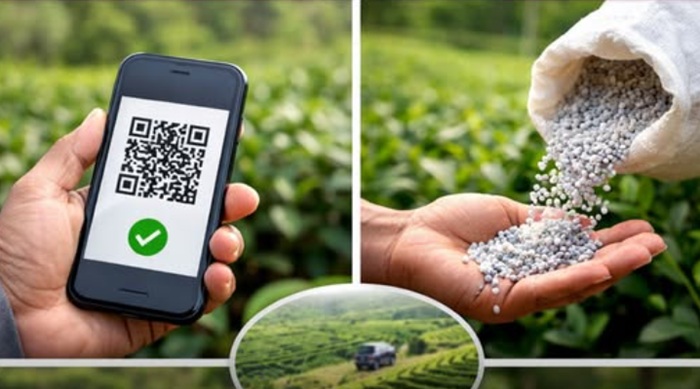
Sri Lanka’s new QR-based tea fertiliser distribution scheme has reached 187,759 small and medium tea growers in its first six months, more than doubling the 84,472 farmers reached during the entire 2024/25 financial year, the Ministry of Plantation and Rural Infrastructure said on Thursday.
The ministry said 21,117.7 metric tonnes of subsidised fertiliser had been distributed under the new system since its October 1, 2025 launch, a 62 percent increase on the 13,015.5 tonnes delivered across the whole of the previous year. A total of 226,511 growers are now registered with QR codes, and the scheme has issued 334,256 bags of 50 kg and 176,199 bags of 25 kg. The subsidy is set at Rs. 4,000 per 50 kg bag and Rs. 2,000 per 25 kg bag.
Under the old system, allocations were made based purely on land size and fertiliser was distributed through the state-owned Fertiliser Corporation. The new model sets subsidies according to average green leaf harvests and allows distribution through approved private companies, which the ministry says has sharply improved delivery speed and coverage.
The reform is part of a 2030 target to raise national tea production to 400 million kg and export earnings to $2.5 billion. It is also the largest success to date of the government’s QR-based subsidy targeting push, a model being extended to diesel, merchant payments via LankaQR and — from June — the Aswasuma welfare programme.