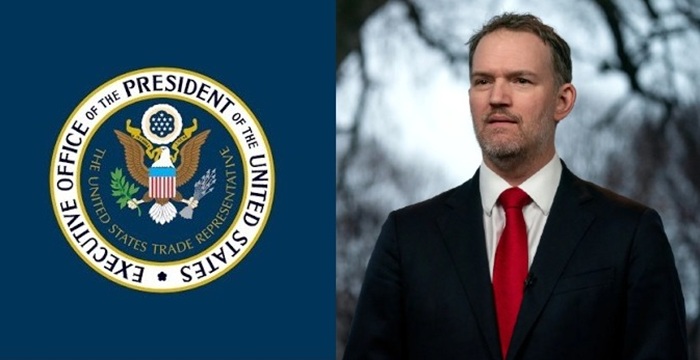
The Office of the United States Trade Representative has proposed a 12.5 percent additional duty on Sri Lanka’s exports to the US after finding that Colombo has neither imposed nor effectively enforced a prohibition on goods produced with forced labour, putting fresh pressure on the apparel sector that drives the bulk of US-bound shipments.
Sri Lanka is one of 60 economies named in the USTR’s Section 301 finding announced on Tuesday. The trade agency said 54 economies had failed to impose forced-labour import prohibitions, while six others — Canada, Mexico, Pakistan, Indonesia, Ecuador and the European Union — had failed to effectively enforce existing regimes. Countries in the second group plus a handful with partial regimes or reciprocal trade commitments face a lower 10 percent duty; the rest, including Sri Lanka, face the 12.5 percent rate.
“The failure of our most important trading partners to address the importation of goods made with forced labour is unacceptable,” US Trade Representative Jamieson Greer said in a statement, accusing trading partners of forcing American workers to “compete globally on an unlevel playing field.”
The USTR is also proposing a special textile mechanism that would let a limited volume of apparel and textile imports enter at a reduced rate, though the volumes and reduced duty were not disclosed. Energy, rare earths, some metals, beef, coffee, certain fruit and vegetables, pharmaceuticals and organic chemicals are listed as exempted products.
EconomyNext, citing the USTR’s detailed report, said Sri Lanka was named in a section on cotton supply chains that may be circumventing the Uyghur Forced Labor Prevention Act (UFLPA) through intermediary manufacturers. The report grouped Sri Lanka with India, Indonesia, Jordan, Mexico, Pakistan, Vietnam, Ethiopia and Kenya as locations where the “deliberate opacity” of supply chains could lead US brands to “unwittingly import goods produced with inputs derived from forced labor”. The UFLPA establishes a rebuttable presumption that goods produced in China’s Xinjiang region are made with forced labour.
Public hearings are scheduled for July 7, with written comments due July 6 and requests to appear by June 22.
The announcement is the second major US trade pressure point on Colombo in two months. Sri Lanka was already facing a 44 percent reciprocal tariff before a US Supreme Court ruling in February struck down Trump’s emergency tariffs, prompting Washington to impose a 10 percent temporary duty that expires on July 24. The new Section 301 framework is widely seen as the replacement architecture.
The Joint Apparel Association Forum has previously warned that US tariff differentials with Vietnam and other competitors threaten Sri Lanka’s $3 billion apparel export book. The government has not yet issued a formal response to the USTR finding.
The Ceylon Chamber of Commerce on Wednesday became the first major business lobby to call for action, urging the government to engage proactively and at the highest levels with the US. The Chamber warned the differential against peers stuck at the 10 percent rate would undermine Sri Lankan competitiveness at a moment when apparel and tea exports had already declined by 7 percent and 6 percent respectively in the first four months of 2026. The country, it said, should “make every effort to secure a reduction in the proposed tariff and ultimately seek its removal altogether” while pressing to return to a lower tariff band. The Chamber stressed Sri Lanka’s reputation as a responsible sourcing destination with strong labour, environmental and governance standards and said it stood ready to support engagement with Washington.