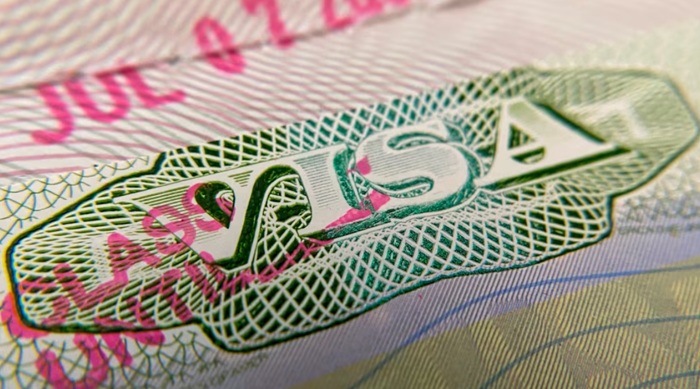
The Trump administration has issued a new State Department directive instructing US consular officers worldwide to refuse non-immigrant visas to applicants who indicate they fear persecution in their home countries.
According to a diplomatic cable sent to all embassies and consulates this week and reviewed by CNN, officers must now ask every non-immigrant visa applicant two mandatory questions: “Have you experienced harm or mistreatment in your country of nationality or last habitual residence?” and “Do you fear harm or mistreatment in returning to your country of nationality or permanent residence?”
“Visa applicants must respond verbally with a ‘no’ to both questions for the consular officer to continue with visa issuance,” the cable instructed. The Washington Post first reported on the directive.
The State Department said the change was aimed at preventing “abuse of the immigration system by visa applicants who misrepresent their purpose of travel, including those who attempt to obtain non-immigrant visas for the purpose of claiming asylum upon arrival in the United States.”
The rule applies across all non-immigrant visa categories — including tourist, student and temporary worker visas — and follows a January suspension of immigrant-visa processing for nationals of 75 countries. The administration has also recently expanded vetting for student-visa applicants and paused some immigration decisions pending revised security checks.
Under US law, asylum can only be sought by people physically present on US territory who are fleeing political, racial or religious persecution. By forcing applicants to deny any such fear before issuing a visa, the new directive effectively closes one of the principal pathways to asylum.
Camille Mackler, an immigration policy consultant, told CNN the directive “is going to put people in really bad, terrible positions of having to make choices that ultimately affect their and their family’s safety,” warning that it would push applicants toward “unsafe pathways and unsafe routes.”
The shift carries direct implications for the Sri Lankan diaspora, including Tamil community members, former conflict-era refugees and their families, who must now answer “no” to the persecution questions to remain eligible for tourist, student or temporary work visas to the United States. Australia remains the largest destination for Sri Lankan émigrés, with 184,800 Sri Lanka-born residents recorded in the 2025 census.