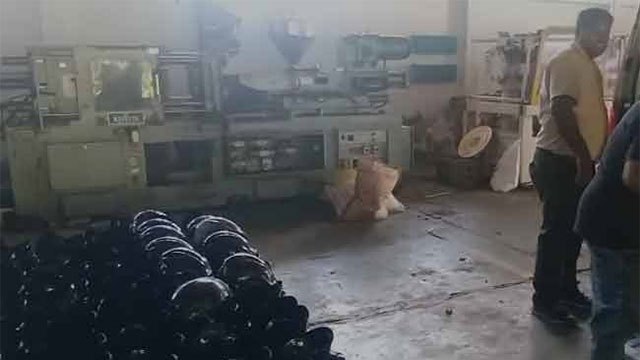
Update, 12 October: A second island-wide operation launched on 6 October produced 84 raids across 21 districts and seized 327 more helmets, taking the two operations’ combined total to 758 helmets from 182 raids. The CAA is now pursuing the supply chain upwards, and is investigating counterfeit SLS stickers in three districts. See Update, 12 October below.
The Consumer Affairs Authority (CAA) has said it will take strict legal action against the manufacture, import, distribution, storage, display or sale of motorcycle helmets that do not carry the Sri Lanka Standards certification mark.
In a statement, the authority said a special enforcement operation on Monday (27) produced 98 raids across the country, during which 431 helmets without the SLS 517 Product Certification Mark were seized. Two factories were also barred from selling 3,520 helmets manufactured during periods when their SLS licences had not been renewed.
Certification has been mandatory for a decade. Under Direction No. 59 of Extraordinary Gazette No. 1923/65 dated July 16, 2015, every motorcycle safety helmet manufactured in or imported into Sri Lanka must bear the SLS 517 mark, and dealing in helmets without it is an offence.
The CAA said 151 raids and enforcement actions have been carried out so far in 2026, covering more than 4,038 helmets found in violation of the regulations, with legal action including seizure and suspension of sales. For the January-to-June period, the authority told the Daily Mirror it had instituted 53 legal cases and seized 87 non-compliant helmets, concluding 39 cases while 14 remain pending before courts.
The authority urged manufacturers to produce helmets only under valid SLS licences, and warned importers, distributors, wholesalers, retailers, mobile traders and online sellers against displaying or selling uncertified headgear.
Context
Motorcycles and three-wheelers account for the largest share of Sri Lanka’s vehicle fleet, and riders make up a substantial proportion of road deaths and serious injuries. A helmet that does not meet the SLS standard may pass a visual inspection while offering little protection in a crash, which is the practical risk behind the certification requirement.
The action follows a broader run of CAA standards enforcement this year, including a comparable crackdown on sanitary towels sold without SLS certification and action over uncertified canned fish. The authority has also been active on pricing, with recent operations targeting overcharging for medical tests at private hospitals.
Update (August 2)
The National Council for Road Safety has launched its own raids targeting manufacturers and sellers of uncertified helmets, working alongside the Sri Lanka Standards Institution and the CAA, NewsFirst reported on Sunday.
Council Chairman Manjula Kularatne said strict legal action would be taken against the manufacture and sale of any substandard helmets identified during the operation. He said wearing a substandard helmet is as dangerous as wearing none at all, and that using a helmet carrying the SLS mark is mandatory.
The council is the statutory body responsible for road safety policy under the Motor Traffic Act, and helmet standardisation falls within its remit. Its involvement widens an enforcement drive that until now had been led by the CAA, and follows the council’s recent push on rear-seat seatbelt enforcement and mandatory roadworthiness checks for buses.
Update (August 6): Two traders fined at Mahara
The Mahara Magistrate’s Court has fined a retailer and a distributor for dealing in helmets without the SLS certification mark, and ordered the destruction of the seized stock.
The CAA said its Gampaha District Investigation Unit instituted the case against New Indigahamula Oil Mart in Weliweriya and Rider Helmet in Makola North for violating Direction No. 59 issued under the Consumer Affairs Authority Act. A raid on July 28 seized 42 helmets that did not carry the SLS 517 mark. Investigators found the Weliweriya outlet had offered the non-compliant helmets for sale, while the Makola business had distributed them to the retailer.
Both defendants pleaded guilty. The court fined them Rs. 5,000 each — Rs. 10,000 in total — and ordered the immediate destruction of all 42 seized helmets.
The case is one of a series before the courts. The CAA has said it instituted 53 legal cases in the January-to-June period alone, concluding 39 and leaving 14 pending, against a running total of more than 4,038 helmets found in violation of the regulations this year. At Rs. 5,000 per defendant, the penalties available to the court are small relative to the volume of stock involved in the wider trade.
The authority asked the public to report the sale or distribution of uncertified helmets on its 1977 hotline during office hours.
Update (October 12): a second island-wide sweep, and a move up the supply chain
The Consumer Affairs Authority has run a second island-wide operation, launched on 6 October, producing 84 raids across 21 districts in which 327 helmets without the SLS certification mark were seized, the Daily Mirror reported. Hiru News carried the same CAA statement.
Taken with the 27 July operation reported above, that gives 758 helmets seized across 182 raids in the two sweeps — 98 raids and 431 helmets in July, 84 raids and 327 helmets in October. The arithmetic in the CAA’s statement is internally consistent.
What the headline figure does and does not cover
The 758 total is the figure both outlets lead on, and it is easily misread as the year’s enforcement tally. It is not. As this article reported in July, the CAA had by then already carried out 151 raids and enforcement actions in 2026, covering more than 4,038 helmets found in violation of the regulations, and had instituted 53 legal cases in the January-to-June period alone.
So 758 is the yield of the two special island-wide operations, not of the CAA’s 2026 helmet enforcement, which is several times larger. Neither filing makes that distinction, and neither gives an updated year-to-date total.
The investigation has widened beyond retailers
This is the substantive change since July. The CAA says helmets lacking the SLS logo were sold under various brand names, and that because identical or similar brands kept appearing across multiple districts, it is expanding investigations along the supply chain — from retailers upwards to suppliers, distributors, importers and manufacturers. In July the enforcement was pitched at the point of sale; it is now aimed at the source.
Two further findings are new:
- Counterfeit certification. The authority is investigating reports of SLS stickers being used without authorisation in the Gampaha, Mullaitivu and Mannar districts. That is a materially worse problem than an unmarked helmet: a buyer checking for the mark, exactly as the CAA advises, would be deceived by it.
- Children’s helmets. Helmets without the SLS logo were found among children’s and small-sized stock. The CAA says these are assessed against the same SLS 517 standard when sold as protective headgear for motorcycle or other vehicle users.
The CAA also identified helmets sold without proper invoices, or where the manufacturer and supplier could not be identified at all, and says legal action is being taken in those cases. It has instructed importers, distributors, wholesalers, retailers, mobile vendors, online sellers and motorcycle shops not to stock, display or sell uncertified helmets, and says further raids will continue without prior notice.
Consumers are urged to check for the SLS mark, obtain a valid receipt, and not to buy uncertified helmets because they are cheaper. Information can be reported on the CAA’s 1977 short code during office hours.
Not reported
Neither filing says how many of the 327 helmets were children’s or small-sized, how many traders face prosecution from the October operation, or what became of the counterfeit-sticker investigations in the three districts named. Neither gives the brand names found, though the CAA says the same brands recurred across districts — the detail that prompted the supply-chain inquiry.
Nothing says whether any importer or manufacturer has yet been identified, which is the test of whether widening the investigation achieves more than the Rs. 5,000-per-defendant fines recorded at Mahara in August. No updated figure is given for cases instituted or concluded in 2026, and neither filing reports whether the 3,520 helmets barred from sale at two factories in July were ultimately destroyed, released or re-certified.
