US President Donald Trump said negotiations with Iran would begin on Monday afternoon and declined to set a deadline for a deal — but Iran’s foreign ministry said on Monday that no talks with Washington are taking place.
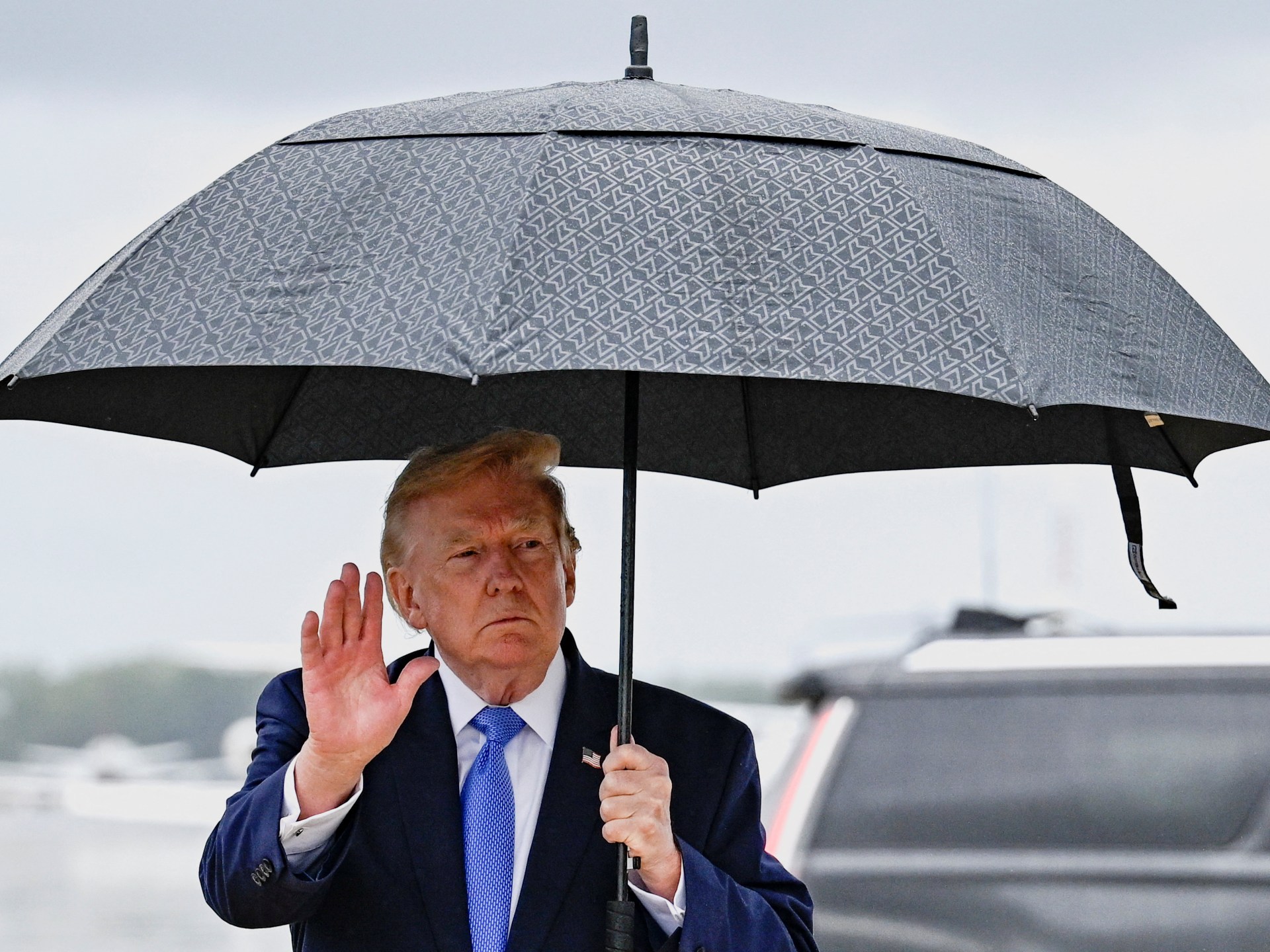
Trump told reporters as he returned to Washington from New Jersey on Sunday that “a negotiation would begin on Monday afternoon,” giving no detail on where it would be held or who would take part, according to a Reuters report carried by the Daily Mirror. Asked whether Iran faced a deadline, he declined to answer. “Would I rather make a deal? I’m not looking to kill people because people die, a lot of people die, and we don’t want that,” he said.
The announcement follows Trump’s decision at the weekend to call off what he described as a planned attack. Speaking aboard Air Force One, he said a plan was in place for “the biggest attack since World War II” against Iran but that he halted it to give diplomacy a chance, Al Jazeera reported. “Obviously, they don’t want to be attacked. They knew the extent of the attack because they saw it forming.”
Trump said Saudi Arabia, the United Arab Emirates and Qatar had urged him to hold off, and that Saudi Crown Prince Mohammed bin Salman had warned of unintended consequences. “There’s a deal on [the Strait of] Hormuz, and then there will be a deal on the nuclear, or you might call it the denuclearisation of Iran,” he said.
Tehran’s account differs
Iranian Foreign Ministry spokesperson Esmaeil Baghaei told reporters in Tehran on Monday that Iran is not currently holding talks with the United States, Al Jazeera reported. He said Pakistan mediates on Iran–US issues and Qatar assists where necessary, and that China is working to prevent escalation — but that no new mediator has joined.
Baghaei said Iran is in discussions with Oman over a temporary safe route through the Strait of Hormuz, and drew a firm line between that and reopening the waterway. Agreeing a route and ensuring safe shipping is “a necessary condition” for opening the strait, he said, “but it is not a sufficient condition.”
“The Strait of Hormuz is not closed due to differences of opinion between Iran and Oman,” he said, attributing the closure to US and Israeli military action.
Iran’s Foreign Minister Abbas Araghchi had said on Sunday that negotiations with Oman over the strait were in their final stages, and held phone calls with Saudi Foreign Minister Prince Faisal bin Farhan and Pakistan’s army chief Asim Munir on diplomatic efforts, Iranian state media reported.
What it means for Sri Lanka
Oil prices fell more than 4% in early trading on Monday on the prospect of talks.
For Sri Lanka the strait matters more than the negotiations. Iran has largely closed Hormuz — a conduit for 20% of the world’s oil and liquefied natural gas before the war — since February, requiring vessels to obtain permission and pay transit fees. The closure has been the single largest driver of import costs since then, feeding fuel prices, electricity generation costs and food inflation.
Baghaei’s distinction between a shipping route and a reopening matters here. A new Iran–Oman corridor would not, on his account, restore the flow of oil that determines Sri Lanka’s import bill.
The Ceylon Petroleum Corporation held fuel prices unchanged for August and is absorbing a reported loss of Rs 63–70 a litre on diesel. The Asian Development Bank approved a USD 200 million loan explicitly to help Sri Lanka absorb pressure from the conflict, and the World Food Programme estimates the war has pushed 1.3 million Sri Lankans into food insecurity.
Tehran rejected Trump’s claim on Sunday that it had asked Washington to hold off strikes, and said the strait would stay closed while US hostilities continue. No deal has been signed. A similar arrangement announced in April did not hold.