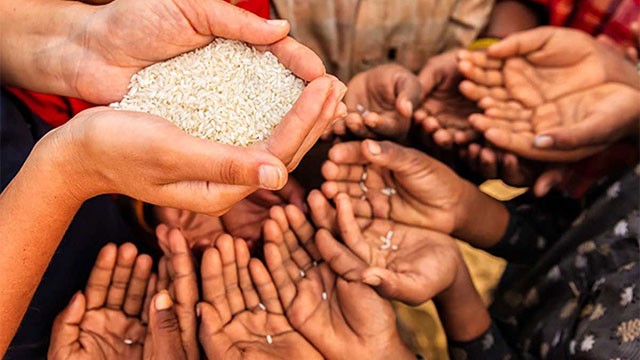
An additional 1.3 million people in Sri Lanka are struggling to meet their basic food needs as a result of the US-Iran war, the World Food Programme has said, naming the country alongside Somalia and Afghanistan as among the worst hit by the oil and food shock.
In a report circulated late on Thursday and reported by Ada Derana on Saturday citing the Associated Press, the WFP said its analysis of three vulnerable countries found that 2.5 million more Somalis, 2.3 million more Afghans and 1.3 million more Sri Lankans had been pushed into acute hunger by the conflict’s impact on energy and food prices. The agency said the findings supported a March projection that 45 million people could fall into food insecurity globally by the end of June, on top of the 318 million already classified as food insecure.
“We remain by that prognosis,” WFP acting executive director Carl Skau told UN reporters. “That’s mainly because the correlation between the prices of energy and food is so tight in many places, and also that in the poorest countries people are already spending all their money on food, and hence when food prices rise, they eat less.”
The Rome-based agency said the Middle East crisis was generating “significant spillovers” on food and fuel prices and disrupting trade, with the strongest effects falling on countries already running tight household budgets. “These impacts are expected to intensify in the coming months, even if the crisis in the Middle East de-escalates,” the WFP said. Skau cited Sudan, Gaza, southern Lebanon, Yemen and Haiti among other hotspots and urged donors to step up, particularly for Somalia and Afghanistan, “because the human consequences of not doing more will be massive.”
The Sri Lanka projection is the most specific WFP number for the country since its April warning that the conflict was driving food, fuel and foreign-exchange risks at the same time as the post-Ditwah recovery was still incomplete. It lands the day after Fitch Ratings cut its 2026 global growth forecast to 2.4% and lifted its Brent crude assumption to $87 per barrel on the assumption Hormuz remains closed until July, and the same day US forces struck Iranian coastal radar sites in the latest flare-up of the three-month war.
Sri Lanka imports virtually all of its fuel and around 80% of its remittances originate from the Gulf, making the household-level transmission of the oil shock unusually direct. Government policy responses so far have included the DMC-WFP Anticipatory Action Roadmap signed earlier this week and continued discussions on targeted relief for daily wage earners and estate workers.
Sources: Ada Derana.