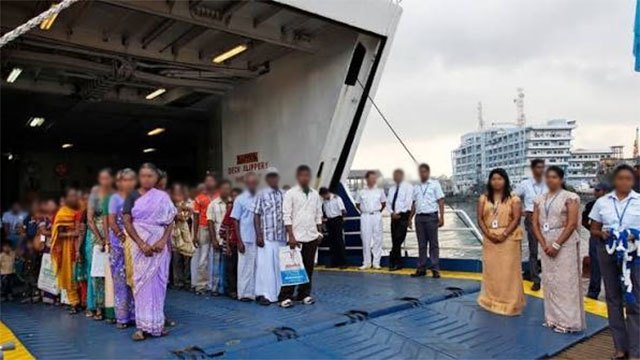
The Cabinet of Ministers has approved special arrangements to allow Sri Lankans who fled to India during the war, and were later registered there as refugees, to return home voluntarily.
The measures apply to people who left the country without using authorised ports of exit or valid travel documents, whose identities have since been confirmed, and who wish to come back through the United Nations High Commissioner for Refugees.
The decision follows legal advice obtained from the Attorney General on granting the immigration clearance such returns would require, according to a statement by the Department of Government Information.
Two categories, both requiring clearance
Sri Lankans who left before August 1, 2006 without valid travel documents will have to have their citizenship verified through Sri Lankan diplomatic missions in India. A clearance report will also be obtained from the State Intelligence Service.
Those who pass both checks will be issued temporary passports and allowed to enter through an authorised port of entry without action being taken against them under the Immigrants and Emigrants Act No. 20 of 1948 — the law that makes irregular departure an offence.
Comparable arrangements will apply to people who left irregularly for India between August 1, 2006 and May 19, 2009, the date the war ended. They too will be admitted without proceedings under the immigration law once their identity is verified and the intelligence service has cleared them.
An exception for serious crimes
The clearance does not extend to everyone. Anyone found to have committed or been involved in murder, treason or other offences covered by specific legal provisions will be detained at the port of entry and handed to the relevant authorities for legal action, the statement said.
Cabinet approved the arrangements on a proposal by the Minister of Public Security and Parliamentary Affairs, following the consultations and legal guidance.
Tens of thousands of Sri Lankans, most of them Tamils from the north and east, crossed the Palk Strait to Tamil Nadu during the conflict, and many have remained in Indian government camps for decades. The decision was taken at the same Cabinet meeting that approved a new Immigration Bill to replace the 1948 Act under which those departures were unlawful.
The Daily Mirror, reporting the same decision, said the clearance process will also confirm that returnees have not been involved in murder, treason or other offences for which specific legal provisions apply, before temporary passports are issued.
Sources: Ada Derana, Daily Mirror.