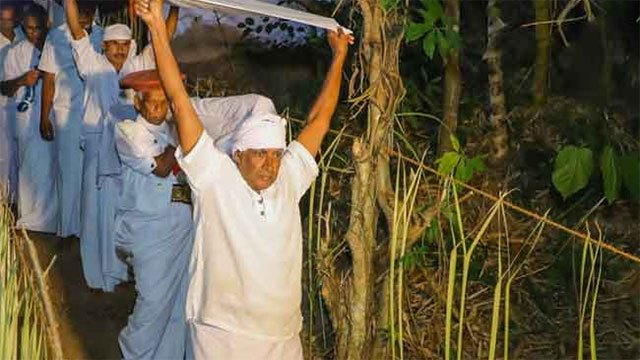
Rituals of the annual Esala Perahera of the historic Sri Dalada Maligawa in Kandy began this morning with the traditional Kap planting ceremony, held at the auspicious time of 6:17 a.m.
The Kap planting is the ceremonial opening of the perahera season. A consecrated post is planted at each of the shrines, marking the start of a sequence of observances that builds over the following fortnight toward the pageant’s best-known street processions.
Following the ceremony, internal processions will be held at the four major devales — Natha, Vishnu, Pattini and Kataragama — for five days, from August 13 to 17. These are conducted within the temple and shrine premises rather than on public roads.
The procession schedule
The first Kumbal Perahera will take to the streets on August 18 and continue until August 22. The first Randoli Perahera is scheduled to begin on August 23, with the final grand Randoli Perahera set for August 27.
The Diya Kepeema, or water-cutting ceremony, and the daytime procession will take place on August 28. Later that afternoon, the Diyawadana Nilame is scheduled to hand over the official Perahera epistle — confirming the successful completion of the annual procession — to the President at the President’s House in Kandy.
The dates align with the government’s earlier announcement that this year’s pageant would begin on August 18, when the Secretary to the President said authorities would provide the inter-agency coordination needed to run the festival.
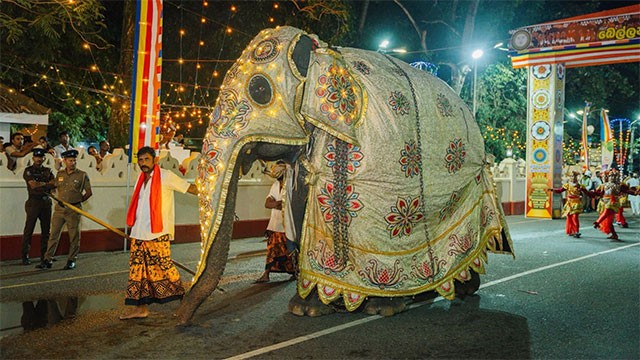
The Esala Perahera honours the Sacred Tooth Relic of the Buddha and features caparisoned elephants, traditional dancers, drummers and torch-bearers over successive nights. It draws large numbers of local devotees and foreign visitors to the hill capital, and is a significant period for Kandy’s hotel trade.
The role of elephants in the pageant drew attention earlier this month, when the Governor of the Central Province said the Animal Welfare Act would not curtail the perahera despite containing provisions on elephants.