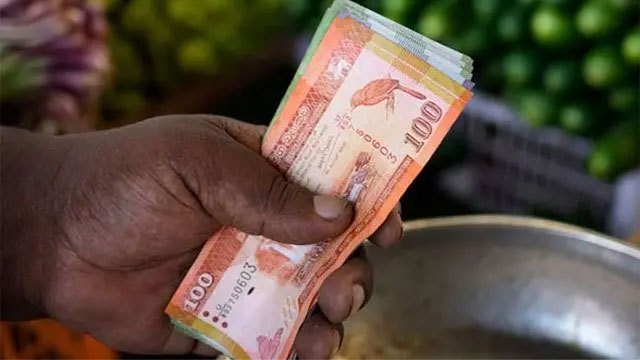
Sri Lanka’s national inflation rate rose to 7.2% in July 2026 from 6.5% in June, according to figures released by the Department of Census and Statistics.
The measure is the year-on-year change in the National Consumer Price Index (NCPI), which tracks retail prices across all provinces rather than the capital alone.
Food drove the increase
Food inflation rose to 4.9% in July from 3.3% in June — an acceleration of 1.6 percentage points in a single month.
Non-food inflation moved marginally in the other direction, easing to 9.2% from 9.3%. Non-food prices are still rising considerably faster than food in absolute terms, but their rate of increase has flattened. The month’s upward push came almost entirely from the food basket, the component households feel most immediately.
How this compares with the Colombo index
The NCPI reading closely tracks the Colombo Consumer Price Index (CCPI), Sri Lanka’s benchmark urban gauge, which rose to 7.3% in July from 6.8% in June.
The two indices are not interchangeable. They use different baskets and geographic coverage, and they are published on different schedules — the CCPI at the end of the reference month, the NCPI roughly three weeks later. Their July components diverge accordingly: the CCPI put food inflation at 6.3% and non-food at 7.8%, against the NCPI’s 4.9% and 9.2%.
Both gauges nonetheless point the same way, showing a headline rate above 7% and food as the main driver of the monthly move.
Context
The reading extends a run of rising consumer prices and keeps inflation above the Central Bank’s 5% target. The Central Bank last held its key policy rate at 8.75%.
Food prices are also under pressure from the developing El Niño, which has already brought dry weather across parts of the island and prompted the government to move the Maha cultivation season forward by about two weeks.
Ada Derana’s report did not break out the individual categories behind the July move, and no other verified newsroom had published the NCPI figures at the time of writing.