President Anura Kumara Dissanayake called on Monday for urgent measures to attract foreign and domestic investment into Sri Lanka’s mineral sector, singling out delays in issuing mining licences as a barrier keeping investors out of the industry.
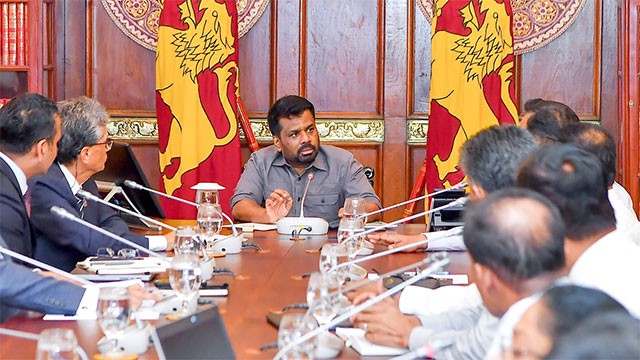
He was speaking at a discussion held at the Presidential Secretariat on Monday afternoon on developing the sector in line with the export-oriented National Mineral Policy 2026, Ada Derana reported. Officials from the Sri Lanka Mineral Sands Association and the Geological Survey and Mines Bureau took part, according to a President’s Media Division statement.
Licensing and coordination
The discussion focused on the difficulties investors face when dealing with government institutions, particularly the delays and obstacles involved in obtaining the licences required for mining, the Daily Mirror reported.
Dissanayake said a more efficient and predictable environment for investors was needed and called for stronger coordination among the government institutions that regulate and facilitate investment in the sector. He also said maximum transparency must be maintained in attracting investment, which Ada Derana reported alongside a call for clear procedures.
The meeting examined shortcomings in the existing policy framework and discussed improving infrastructure, offering incentives to investors and strengthening research and development to support domestic manufacturing, Hiru News reported.
Beyond raw exports
Under the policy direction discussed, Sri Lanka aims to move past the extraction and export of raw minerals towards value addition, processing and mineral-based manufacturing.
That is the same objective Mines and Minerals Minister Sunil Handunetti set out in Parliament in June, when he said the 2026 policy would mandate domestic value addition before raw minerals can be exported, replacing the framework in place since 1999. Handunetti said then that a lack of local processing had forced the country to export natural resources “in their rawest forms without significant economic gain,” and that of 12 valid licences, six were held by state institutions.
Handunetti was not reported as attending Monday’s meeting, and none of the four outlets said whether the policy has yet been formally adopted or remains in draft.
Concerns raised outside the meeting
EconomyNext was the only outlet to set the meeting against criticism of the sector. It reported that industry monitors and environmental groups have concerns about the strategy, and that critics attribute the failure of past overhaul attempts to policy inconsistency and weak regulatory oversight — which, it said, allowed ilmenite, rutile and high-purity quartz to leave the country with minimal processing.
Environmental advocates quoted by EconomyNext argue that any expansion of inland and coastal mining must come with strict ecological safeguards against habitat destruction and coastal erosion.
Those views were not attributed to named individuals or organisations, and none of the other three outlets carried them. Neither the PMD statement nor any of the reports indicated that environmental safeguards were discussed at the meeting itself.
What was not reported
No outlet gave a timeline for the licensing reforms, named the institutions whose coordination the President found wanting, or put a figure on current or targeted mineral export earnings. None reported whether any specific licence applications are pending, or how long the delays complained of have run.
Sources
- President calls for faster approvals and greater transparency to attract investments to mineral sector — Ada Derana, August 31
- President calls for greater transparency, investment to develop Sri Lanka’s mineral industry — Daily Mirror, August 31
- Sri Lanka govt explores unexploited minerals amid concerns — EconomyNext, August 31
- Talks focus on advancing Sri Lanka’s mineral sector under 2026 policy — Hiru News, August 31