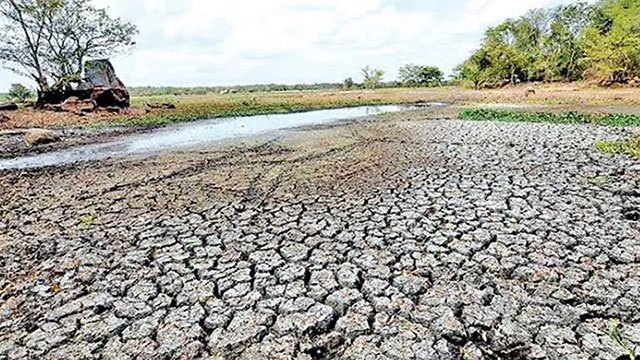
The number of people affected by Sri Lanka’s dry weather has reached 88,068, from 27,475 families, the Disaster Management Centre said on Tuesday — and the government has put a figure on the damage to farmland for the first time.
The DMC count spans 28 Divisional Secretariat Divisions across six districts, with drinking water being distributed in 27 of them, Ada Derana reported.
Where the water is going
Monaragala remains the worst-hit district, with 37,890 people from 11,751 families receiving water. Batticaloa follows at 28,523 people from 9,547 families.
Ampara, Badulla, Polonnaruwa and Ratnapura account for a further 14,955 people from 5,750 families.
Those itemised figures describe people receiving drinking water, not the total affected, and they sum to 81,368 — about 6,700 short of the 88,068 headline. The gap is consistent with the DMC’s own statement that water is being distributed in 27 of the 28 affected divisions, rather than all of them. It should not be read as a discrepancy in the count.
Hambantota has come off the list
The district total has moved down even as the people total has moved up.
On 21 August the DMC put the figure at 81,765 people across seven districts. The seven were Monaragala, Ampara, Badulla, Batticaloa, Polonnaruwa, Ratnapura and Hambantota. The current six are the same list without Hambantota.
Ada Derana did not say why Hambantota dropped out. The DMC’s district list is a weekly reclassification rather than a running cumulative tally, so a district leaving it does not necessarily mean conditions there have eased — and, as below, Hambantota still appears among the districts with the most crop damage.
Rs. 3 billion for about 7,000 farmers
Separately, Cabinet Spokesman and Health Minister Dr. Nalinda Jayatissa told the weekly Cabinet briefing that the dry weather has damaged nearly 8,000 acres of farmland belonging to around 7,000 farmers, Ada Derana reported.
The government has allocated Rs. 3,000 million as the first phase of an expedited compensation programme.
“Accordingly, compensation of Rs. 100,000 per hectare will be provided to farmers for crops including paddy, maize, big onions, potatoes, soya and chillies, subject to a maximum extent of five acres per farmer,” Jayatissa said.
The crop damage falls in a different pattern
The districts worst affected by crop loss are not the same as those receiving the most water.
- Anuradhapura — 1,923 acres (highest)
- Monaragala — 1,421 acres
- Polonnaruwa — 1,259 acres
- Ampara — 1,055 acres
- Hambantota — 783 acres
Anuradhapura and Hambantota lead on crop damage without appearing on the DMC’s six-district water-distribution list, while Batticaloa — second on that list — does not appear among the five worst for crop loss. The minister described these five as the highest recorded so far, not as the full set of affected districts.
Farmers who have suffered losses were told to report them to the Agricultural Research and Production Assistant at the nearest Department of Agrarian Development office, or to Development or Field Officers of the Agricultural and Agrarian Insurance Board.
What has not been reported
Neither account gave the total value of the crop losses, said how the Rs. 3,000 million was arrived at or what a second phase would cost, or set out when payments will reach farmers. Ada Derana was the only verified newsroom carrying either the DMC figures or the compensation decision at the time of writing.
Context
The dry spell has been running long enough to reach infrastructure and household supply as well as fields. Reservoir levels have fallen sharply, and in Polonnaruwa villages the day is now organised around fetching water as wells run dry.
The coconut sector has already been warned of a yield hit, and the UN has flagged the El Niño conditions behind the spell while forecasting a swing toward increased rainfall later in the year.
Wildlife is under the same pressure: the Wildlife Department is trucking water into Yala after forest water sources ran dry.