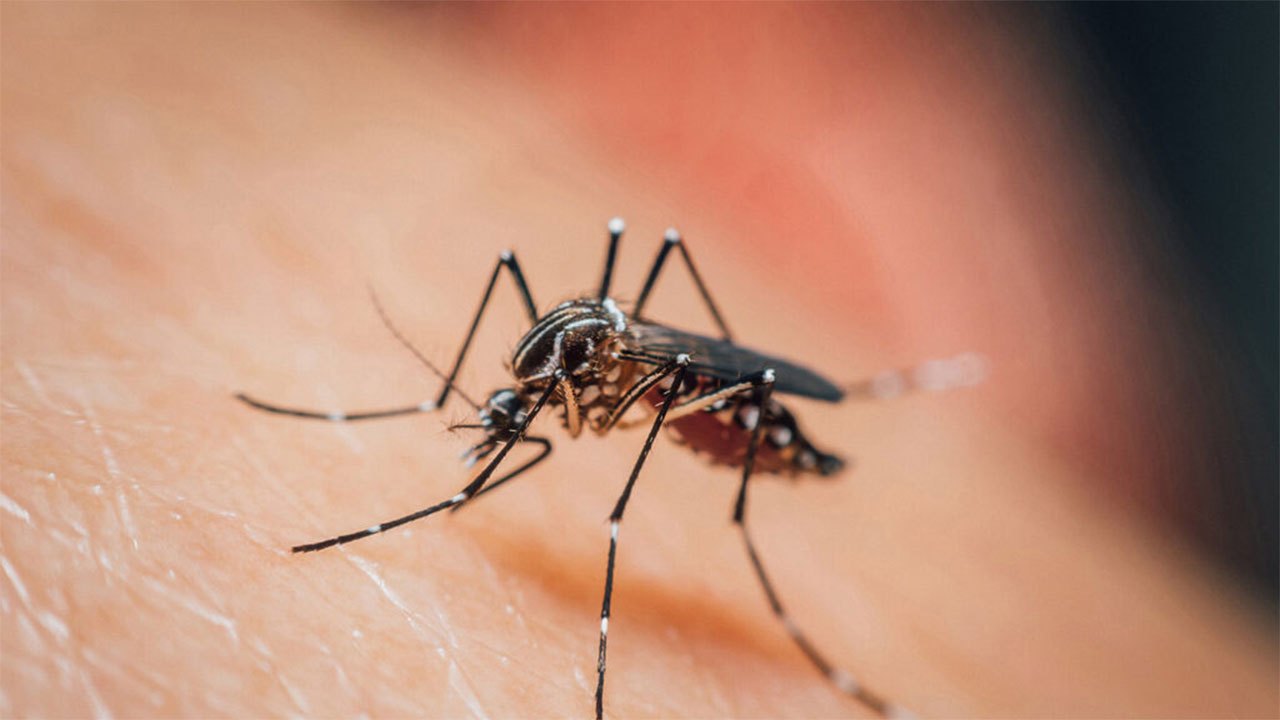
Sri Lanka recorded 10,157 dengue cases in August, taking the total for the year to 95,493, the National Dengue Control Unit said.
The month’s figure is the clearest sign yet that the mid-year surge has broken. July closed with 29,964 cases — the highest monthly count of 2026 — and June with 21,533. August came in at barely a third of July’s total, Ada Derana reported.
The death toll stands at 72 island-wide, unchanged since late August. The unit put the case-fatality rate at 0.076 per cent.
Where the cases are
The Western Province accounts for 50,506 cases, more than half the national total. The Southern Province follows with 13,886 and the Central Province with 8,710.
At district level, Gampaha remains the worst affected. The control unit gave its share as 21.31 per cent of all cases rather than an absolute number this time — a departure from earlier releases, which listed district counts directly. That share works out to roughly 20,350 cases. Colombo District has reported 18,914 cases and Kandy District 6,977.
Fifty Medical Officer of Health divisions across the island are still classified as high-risk areas for dengue. That count fell from 76 at the end of August and has held at 50 since. The classification is reassessed weekly, so a fall of that size reflects reclassification rather than a drop in the underlying case load.
What the release does not show
Because the unit gave Gampaha as a percentage and omitted Kalutara altogether, the Western Province arithmetic cannot be checked against the provincial total this month. Earlier releases consistently left about 5,000 provincial cases unaccounted for once Colombo, Gampaha and Kalutara — the province’s only three districts — were summed. Whether that gap persists is not determinable from Tuesday’s figures.
The release also does not break down the 72 deaths by district or month, and does not say how many of August’s cases required hospital admission.
Context
The slowdown follows a public health campaign that ran through the peak. Daily case numbers dropped roughly 80 per cent from their July high during the second half of August, and the Education Ministry has instructed schools to run dengue control programmes before the new term begins.
The second inter-monsoon rains are expected from October, and the UN has warned that Sri Lanka could see higher-than-normal rainfall in the latter part of the year under prevailing El Niño conditions — the conditions under which mosquito breeding sites typically multiply.