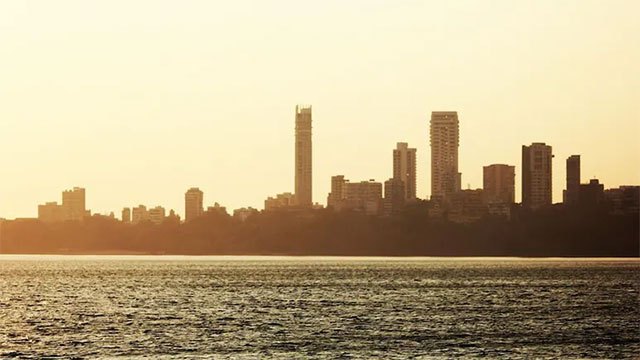
More than 14 million people in the low-lying deltas of South Asia are at immediate risk of losing their homes to permanent inundation, according to a United Nations Secretary-General’s report on sea level rise reported by Ada Derana.
The report, titled Challenges related to sea level rise and ways and approaches to address it, singles out Kolkata and Mumbai in India and Dhaka in Bangladesh as the cities where displacement, rather than financial loss, is the defining risk.
“Rising seas are no longer a distant threat: they are happening now, faster than at any point in recorded history, and the pace is accelerating,” the report says, calling sea level rise one of the most profound threats facing populations in developed and developing states alike.
Two kinds of exposure
The report draws a sharp distinction between regions. In high-income coastal cities such as Miami, New York and Guangzhou, the dominant risk is financial: coastal assets valued at between US$2 trillion and US$3.5 trillion are exposed. In South Asia’s deltas, the same physical process registers as mass displacement.
That divergence, the report argues, is a reason to broaden the indicators used to assess coastal vulnerability, so that social risks measured in lives and displacement carry the same urgency as those counted in dollars.
The rate is accelerating
Global sea level rose by an average of 4.7 millimetres a year between 2014 and 2023. In 2024 alone it rose 5.9 millimetres — a record — driven by exceptional ocean warming that in some regions has been faster than at any point in the past 4,000 years. The 2025 level remained comparable to 2024’s record, following a rise of roughly 5 millimetres across 2023–24 associated with El Niño. The annual rate over 2012–2025 was 4.75 millimetres.
The report attributes the acceleration to melting glaciers and the thermal expansion of warming oceans, and expects the rate to keep climbing through 2050 because of warming already locked into the climate system.
Nearly 770 million people — about 10 per cent of the world’s population — live in coastal areas less than five metres above the high-tide line. (Ada Derana’s rendering of the wire copy gives this threshold as “5 million”, an evident typographical error for metres.)
Why it reads locally
The report does not name Sri Lanka. But the three economic activities it identifies as disproportionately exposed — artisanal fisheries, small-scale tourism and port-dependent local economies — describe much of the Sri Lankan coast, and the mechanisms it describes are already documented here: saltwater pushing inland to salinise wells and soils, storm-driven overwash contaminating surface and groundwater, and the degradation of coastal ecosystems such as the mangrove systems placed under protection in Puttalam.
The report warns that rising seas act as a threat multiplier capable of forcing relocation and, in extreme cases, causing the permanent loss of land or even the territory of a state. It says integrated policy that links river basins, freshwater systems, coasts and the ocean remains insufficiently reflected in regulatory and land-use planning frameworks.
This is the second UN climate warning with direct South Asian relevance in a week, following the assessment of accelerating glacier loss across the Himalaya.
Not reported
Ada Derana carried the report via the PTI wire and did not give the date the report goes before the General Assembly, its document symbol, or any national breakdown for the 14 million figure. No other verified Sri Lankan newsroom appears to have carried the report.