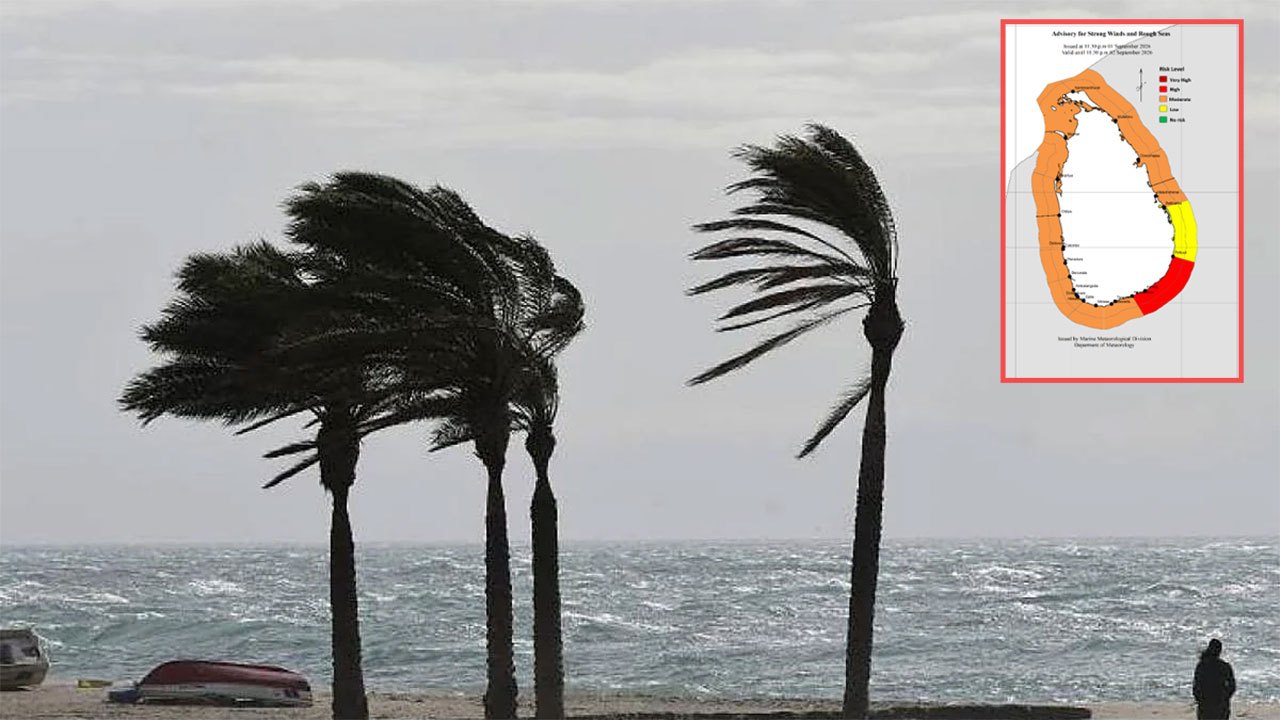
Water releases from the main reservoirs of the Polonnaruwa district for cultivation have been halted completely from this week, district secretary Sujantha Ekanayake said, according to Hiru News.
The announcement completes a shutdown that has been running tank by tank since late August. Releases from Parakrama Samudra, the district’s largest tank, and from Giritale had already been terminated by 29 August, when Minneriya stood at 36% of capacity — about 40,000 acre-feet against a capacity near 110,000 — with its own releases due to end within two days. Ekanayake’s statement confirms that they did.
Polonnaruwa is one of the country’s principal paddy districts, and the three tanks named are the backbone of its irrigation network. Hiru did not report how many acres of standing Yala crop are affected, whether any harvest is still in the ground, or what provision is being made for farmers who planted on the expectation of a full season.
The wider dry spell
The shutdown sits inside a national picture that has been deteriorating for weeks. Dry weather has affected more than 88,000 people across six districts, Anuradhapura’s 612 tanks fell below 5% of capacity, and in Polonnaruwa’s own villages residents have been travelling kilometres for drinking water as wells dry out.
Hiru repeated the Department of Meteorology’s assessment that there is a 90% probability the prevailing El Niño develops into a “very strong” event. That figure is not new — the department has carried it since mid-August, alongside a roughly 70% chance the event proves stronger than any El Niño recorded since 1950.
The FAO expects the rain to return in October
The Food and Agriculture Organization has identified Sri Lanka as a country that will be wetter than average from October, the Daily Mirror reported on Tuesday, in a third filing of the UN Asia-Pacific El Niño assessment already reported here.
The wetter signal matters from October because it coincides with the Second Inter-Monsoon of October and November — typically the wettest period of the year across the island, with rainfall that is widespread and can be locally intense — followed by the Northeast Monsoon from December to February. A substantial share of Sri Lanka’s annual rainfall arrives in those months.
The Daily Mirror’s account adds three points the earlier filings did not carry.
First, the outcome is conditional on the Indian Ocean Dipole. As with Pakistan, the FAO says the evolution of the IOD — particularly whether it strengthens into a positive phase — will be important in determining whether the wetter conditions actually materialise.
Second, the FAO now describes the forecasts as pointing “increasingly towards a very strong, and potentially exceptional” El Niño, one that could rank among the strongest in the historical record and may extend well into 2027.
Third, it puts a number on the regional stakes: an additional 8.2 million people could face acute food insecurity across Asia and the Pacific in just a few monitored countries, with the true figure likely higher.
The FAO cautions that strength alone will not determine the damage. What matters is where rainfall and temperature anomalies coincide with crop calendars, water scarcity, vulnerable livelihoods and limited coping capacity. It describes the risk as emerging but not yet widespread, leaving what it calls a critical and narrowing window for anticipatory action, with the most serious agricultural and food-security effects unlikely to appear until late 2026 and 2027.
The two timelines do not line up
For Polonnaruwa the gap between the two reports is the problem. The tanks are being closed now, at the end of the Yala season; the rain the FAO expects arrives in October, at the start of Maha planting. Whether that rain refills the reservoirs in time to support Maha cultivation — or arrives heavily enough to disrupt planting instead — is the question neither report answers.
What has not been reported
Neither outlet gave current storage levels for Parakrama Samudra, Giritale or Minneriya as of this week, said whether the Irrigation Department has issued guidance on Maha planting dates for the district, or reported what compensation is available to Polonnaruwa farmers. No outlet has stated when releases might resume.