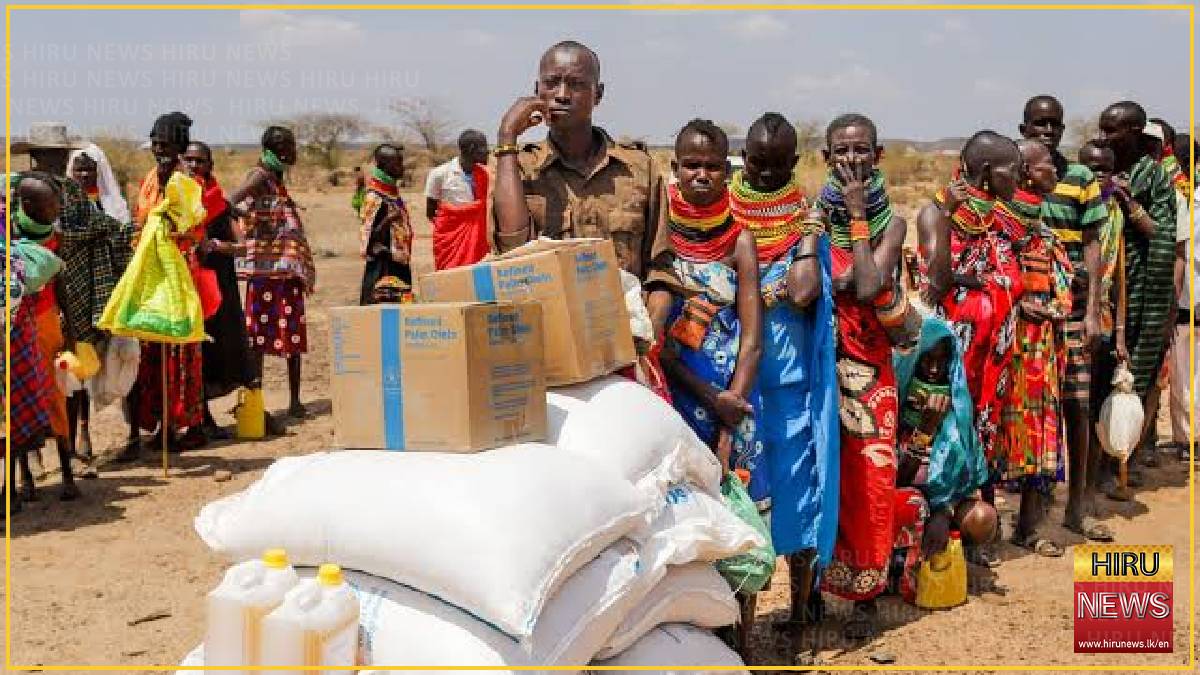
The global humanitarian aid system has suffered one of its sharpest contractions since it was built after the Second World War, with 64 million fewer people receiving assistance last year, according to a report published on Thursday, 10 September.
The scale of the cut
The State of the Humanitarian System 2026 report, produced by the Active Learning Network for Accountability and Performance (Alnap), found that aid contributions fell by 30% between 2022 and 2025, with funding dropping to an estimated US$33.3 billion in 2025 from a peak of US$47.5 billion in 2022.
USAID absorbed the most dramatic reduction — 55% in 2025 — but the retreat was broad: 13 of the 20 largest donors cut their contributions last year. Up to 23% of humanitarian staffing is estimated to have been lost over the same period.
The figure that matters most
The report’s sharpest number is not the headline total but what reaches an individual. The amount targeted per person fell from US$178 in 2021 to US$90 in 2025 — while assessed need per person rose to US$255.
In other words, the system is now planning to deliver roughly 35% of what it judges people require. Through 2025, support narrowed to those whose lives were in immediate danger, and longer-term recovery work was scaled back sharply.
“The impacts were not felt equally,” said Jennifer Doherty, a co-author of the report. “The combination of reduced funding and restrictive politics meant women, children, elderly people and displaced people were especially hardest hit. Specialised services closed and targeted support became harder to sustain.”
States as a source of harm
The report goes further than funding, finding that governments were not merely failing to protect civilians but were often endangering them. States were responsible for 64% of attacks on healthcare workers and largely responsible for violence affecting aid workers, principally through airstrikes.
It also flags growing donor pressure over how aid may be spent, citing the US spending freeze on programmes judged to be driven by diversity, equity and inclusion policies.
In Yemen, nutrition worsened and diphtheria cases rose after vaccination campaigns were suspended. “Problems are not occurring separately,” said Mohammed Bahashwan, Action for Humanity’s country director there. “A family may have lost its income, be unable to afford food, have a malnourished child and still need to travel considerable distances or pay costs they cannot afford to access healthcare.”
Where the system still worked
Alnap found examples of effective mobilisation, usually led by local aid organisations and diaspora networks — but said the international system coordinated poorly with them, and that local organisations and their staff were among the worst affected by the cuts.
Meg Sattler, chief executive of Vienna-based Ground Truth Solutions, argued for a greater focus on localisation, saying the international system had not adapted quickly enough or pushed back against US-imposed conditions. “It is especially causing distress where aid is now considered ‘life-saving only’ and isn’t letting people do things such as send their kids to school or save to start a business — things that would help them be less reliant on aid in the future,” she said.
Why it matters here
Sri Lanka has been on the receiving end of this system recently: international humanitarian funding underwrote much of the Cyclone Ditwah response, including EU support channelled through Save the Children. A donor pool shrinking by 30% narrows what is available for the next such emergency.
Not reported
The report as carried gives no figure for how many people received aid in total in 2025, no country-by-country breakdown of the funding decline, and no projection for 2026. Hiru News carried the report credited to The Guardian; no other verified newsroom available to us had filed on it at the time of writing.