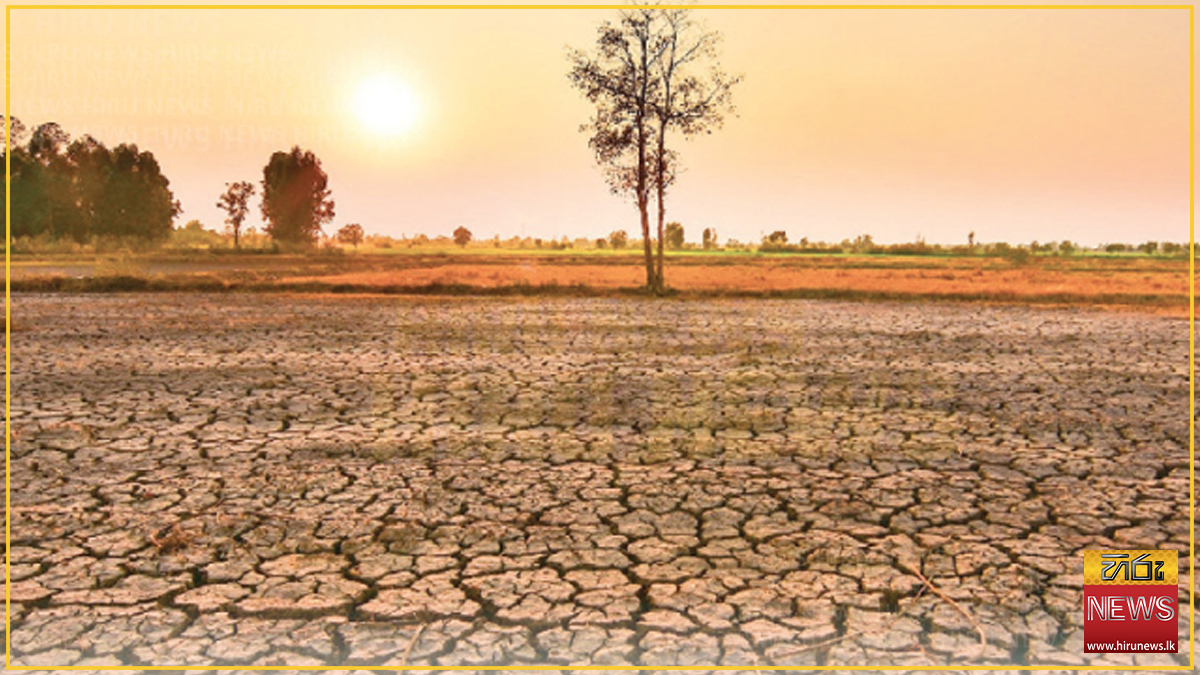
The El Niño now developing is on course to become the strongest in 75 years, Director General of Meteorology Ajith Wijemannage said, as the Ministry of Environment put the number of people affected in Sri Lanka at more than 160,000.
Global El Niño conditions strengthened considerably over the past month, with sea surface temperatures in the eastern equatorial Pacific rising sharply during August, Wijemannage told the Daily Mirror.
“Last month, we estimated a 69% probability that this El Niño would surpass all events recorded since 1950. The latest forecasts now indicate a much higher likelihood of it becoming the strongest in the past 75 years,” he said.
That is the first time the department has put a previous figure against the 98% probability of a strong El Niño between October and December it announced on Friday. It had described the event as the strongest in 75 years in August without quantifying it.
Wet, then dry
Rainfall will stay relatively low for about two weeks before intensifying from late September, with above-average falls island-wide in October and November. A positive Indian Ocean Dipole is expected to prolong wet conditions into December. Precipitation should then drop sharply in January, February and March, raising the risk of water shortages.
Wijemannage said the event should not be read as a simple drought. “For Sri Lanka, it is not simply a drought; it is a major shift in our seasonal monsoon patterns,” he said, adding that heat would persist regardless: “Even when it rains, the temperature will not decrease significantly.”
A Cabinet-level committee of state institutions has begun meeting regularly on water management.
78,000 livelihoods gone
More than 78,000 people across fisheries, agriculture and the plantations have lost their livelihoods, the Ministry of Environment said, according to Hiru News. The total affected exceeds 160,000, up from the 154,167 across eight districts recorded on 9 September. The Disaster Management Centre is trucking drinking water to 141,000 of them.
Faster-maturing paddy
Agriculture Minister K. D. Lal Kantha told Parliament on Friday that the dry spell is expected to run from end-December 2026 to April 2027, and that the ministry has drawn up a planting plan to protect food security, the Daily Mirror reported.
Short-duration varieties — BG 94/1, BG 360, BG 375, AG 378 and BG 352, which yield in three and a half months — will be sown as usual, with seed cultivation to begin by 15 October. Two-and-a-half-month varieties are held in reserve should flash floods hit in September or October. The ministry is targeting 830,000 hectares of Maha paddy, plus 105,000 hectares of corn and 9,450 hectares of onions from early October, and is establishing extra crop nurseries.
Lal Kantha said reservoirs under the Irrigation Department and the Mahaweli Authority stand at 55%. That is a more comfortable reading than the 34.3% of effective capacity recorded for major reservoirs on 6 September; the two figures cover different reservoir sets and different measures, and neither account reconciles them.
He also warned that cattle, poultry and pigs are mating less in the heat, face higher disease risk, and that grass and animal feed will run short.
Not reported
Neither account says what threshold defines “strongest in 75 years”, nor which agency’s model the ranking comes from. The Environment Ministry does not break the 78,000 livelihood losses down by sector or district, say over what period they were counted, or explain how “lost livelihoods” is defined against the wider 160,000 figure. Lal Kantha did not say what the 830,000-hectare Maha target compares with in a normal year, whether seed stocks of the five short-duration varieties are sufficient, or what happens to farmers who miss the 15 October window. A final decision on the 2026/27 Maha season is due on 18 September.