In Kalugammulla in Moneragala, a farming family’s day now starts with the search for water and ends in a tree. NewsFirst sent a reporting team to the district and filed an account of what the El Niño drought looks like at household level.
Weerasinghe, who has farmed the area for between 25 and 30 years, planted two acres of cowpea earlier this year. The entire crop has been destroyed.
“I’ve been farming for 25 to 30 years. At the moment there’s nothing left. Everything has died. We planted expecting rain, but the rain never came,” he said.
The district’s water
The reservoir nearest the family’s home has dried up completely. Across Moneragala District, 487 of roughly 800 tanks have been reduced to a similar state, and water levels in several major reservoirs have fallen below 30 percent of capacity. Authorities are rationing supplies as levels in the Jilone and Kumbukkan Oya continue to fall.
Moneragala remains the worst-hit of the eight districts under El Niño-driven dry weather, with more than 42,000 people affected — roughly a quarter of the 161,000 recorded islandwide. National reservoir storage stood at 33.6 percent of effective capacity in the most recent Irrigation Department figures.
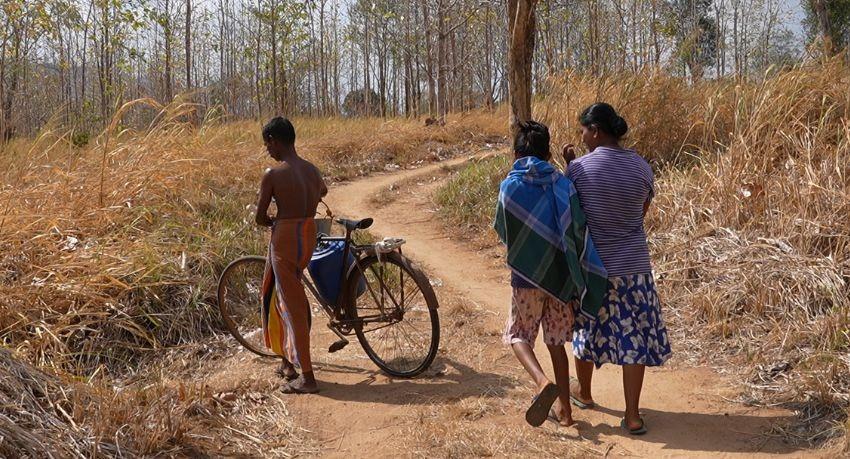
His wife, Shanthi Menike, said the drought is the worst in nearly three decades. “Usually, by this time of year, we would have received rain. Even during previous dry periods, it was never this severe… If this continues, we won’t even have drinking water left.” The family travels several kilometres by bicycle with water cans to collect drinking water, and what they gather in the evening is enough only to wash.
Nights on watch
With forest food and water gone, elephants are entering villages. Several houses in Kalugammulla, including homes near the family’s, have been damaged in recent days — the same pressure that has driven the Wildlife Department to truck water into national parks and close Yala Blocks 1 and 2.
The family now sleeps in shifts, in a tree. “Elephants came again last night. We’re scared. We have dinner early, around five in the evening, take the child and sit up there with flashlights, watching and waiting,” Weerasinghe said. They climb down at about four in the morning, in time for Shanthi Menike to cook before their daughter leaves for school.
Weerasinghe says he intends to plant maize and cashew when the rain returns.
Not reported
The report does not say whether the family has received drinking water from the Disaster Management Centre’s bowser distribution, whether they have claimed crop compensation for the failed cowpea, or whether the Wildlife Department has been asked to respond to the elephant intrusions at Kalugammulla. It does not give a district figure for houses damaged by elephants this season, name the major reservoirs that have fallen below 30 percent, or say when rain is forecast for the district.
The report is based on the account of one household; the tank and reservoir figures are attributed in general terms rather than to a named department.