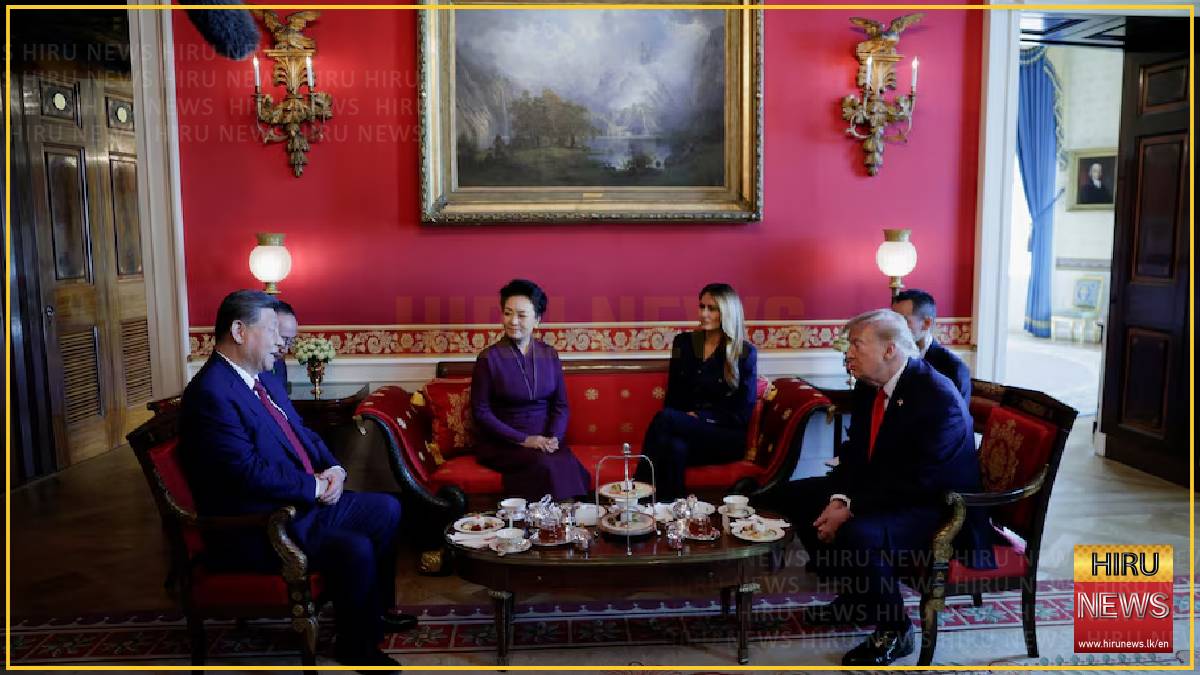
China and the United States have agreed a $30 billion reciprocal tariff-reduction arrangement and will open a dialogue on artificial intelligence, under an eight-point consensus reached during President Xi Jinping’s visit to Washington, China’s Ministry of Foreign Affairs said on Saturday.
The announcement came after Xi had returned to Beijing, closing a three-day state visit that produced personal diplomacy rather than public breakthroughs, Hiru News reported, citing Reuters.
Alongside the tariff arrangement, the ministry said the two sides endorsed the creation of a trade council and an extension of outcomes from earlier talks in Kuala Lumpur. Both governments had already agreed to extend a trade truce by two months from its 10 November expiry, US Treasury Secretary Scott Bessent said earlier in the week.
The line that matters most to Sri Lanka
Buried in the foreign-policy section of the consensus is a statement with direct bearing on the shipping crisis Sri Lanka has been living with for months: the two leaders agreed that no country or entity should impose transit tolls on international waterways.
Neither government named the Strait of Hormuz. But transit tolls are the central mechanism of the Hormuz dispute — Iran has levied charges on vessels using the strait and has routed the resulting revenue through its central bank, and the US Treasury has warned against payments routed through charities.
A joint US-China position against waterway tolls is a notable hardening. At the summit itself two days earlier, Al Jazeera reported, Xi voiced support for a US-Iran interim agreement but made no commitments. China is Iran’s largest oil customer, which gives the wording weight it would not otherwise carry.
The leaders also agreed that Iran should fulfil its commitment not to develop nuclear weapons.
AI, and the rest of the package
On artificial intelligence, the two sides agreed to establish a dialogue on the technology’s risks and benefits, with the next round set for November, and to open a communication channel for AI-related incidents.
They also agreed to support each other in hosting the APEC leaders’ meeting and the G20 summit, with both leaders signalling they intend to attend the gathering hosted by the other. The ministry’s statement recalled that China and the United States fought as allies in the Second World War.
Context and caveats
The consensus as described is Beijing’s account. The Chinese foreign ministry issued it; no matching US readout is reflected in the reporting available to this site, and the two governments have previously given divergent descriptions of what they agreed at a summit.
The reporting does not say which goods the $30 billion covers, when the reductions take effect, or how the figure is calculated. Al Jazeera noted before the summit that Chinese goods entering the US still faced tariffs of 36.5 percent and US goods entering China 31 percent, per a July Congressional Research Service report.
For Sri Lanka the exposure is indirect but real. The island’s export earnings depend on US demand, its fuel import bill tracks the Gulf shipping situation, and its shipping and bunkering sector sits on the Indian Ocean routes the two powers were discussing.