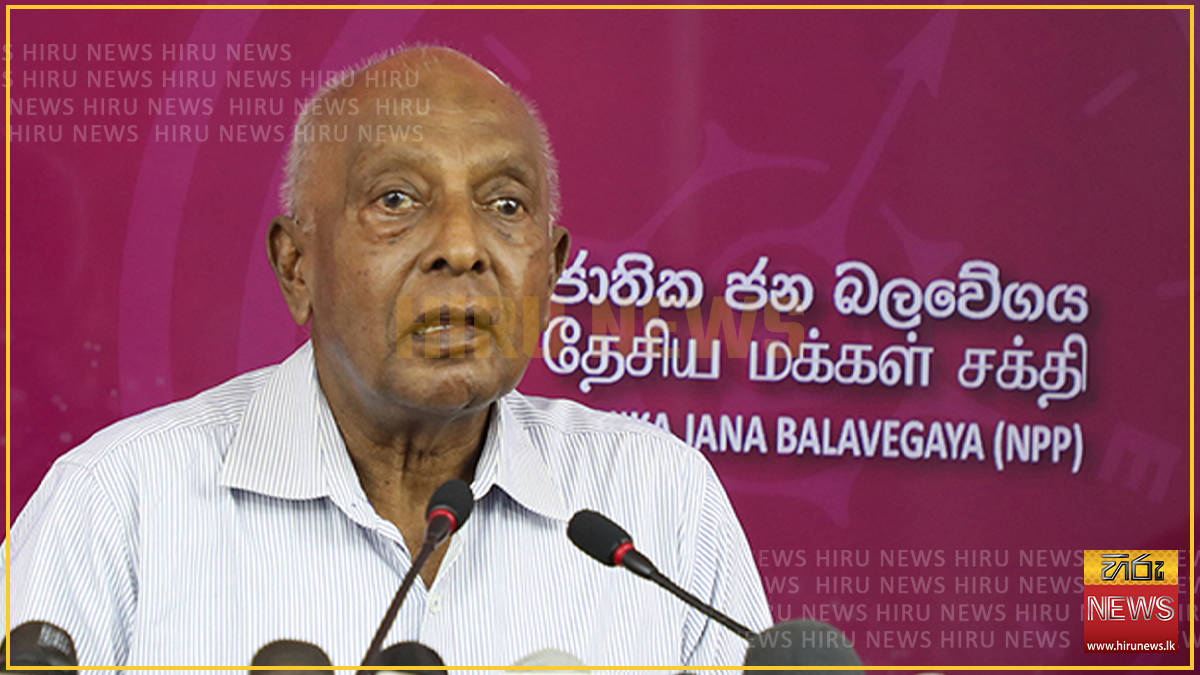
National People’s Power Executive Council member and attorney-at-law Lal Wijenayake will remain in the party despite having opposed the 22nd Amendment, Hiru News reported.
Wijenayake, speaking to a newspaper, said he has no intention of resigning from the NPP, and that the position follows recent discussions with JVP leader Anura Kumara Dissanayake, who is also the President.
He will not join the opposition protests
Wijenayake said explicitly that he will not take part in protest actions organised by the joint opposition against the amendment — drawing a line between disagreeing with his party’s position and making common cause with its opponents.
At the same time, he reiterated his commitment to supporting the steps taken by the Bar Association of Sri Lanka (BASL) in opposing the 22nd Amendment.
That is the substance of the story: a senior party lawyer holding an internal dissent while refusing to convert it into either a resignation or a street alliance.
Context
Parliament passed the 22nd Amendment 158 votes to 63 on 25 September. The BASL has been among the most persistent institutional critics of the reform, which alters judicial retirement ages and the composition of the courts; the association called a special general meeting over the judges’ retirement provisions in July.
Health Minister Nalinda Jayatissa, meanwhile, said on the same day that the Opposition was in disarray after the vote — a reminder that dissent is not confined to one side of the chamber.
A note on the wording
Hiru’s account describes Wijenayake as opposing “the proposed 22nd Amendment” and backing BASL steps to oppose “the passage” of it. Both phrasings describe a stage that has already closed — the amendment was enacted three days earlier. The report does not say whether Wijenayake’s continued support for the BASL refers to a post-enactment challenge or is simply carried-over wording.