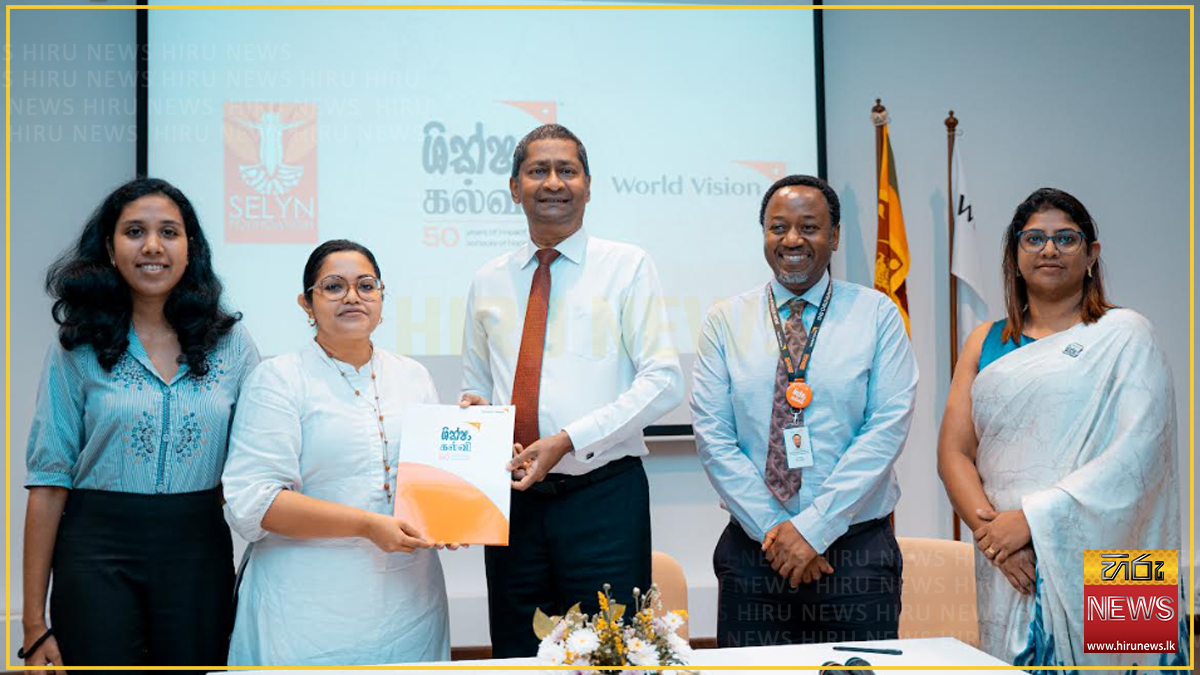
The Selyn Foundation has partnered with World Vision Lanka to run menstrual health and hygiene sessions for schoolchildren in 50 under-resourced schools across all 25 districts of Sri Lanka.
The programme runs under World Vision Lanka’s SHIKSHA/KALVI initiative and was formally launched at an event at the organisation’s premises, Hiru News reported.
The sessions cover the fundamentals of menstrual health, myths and stigma, menstrual tracking, body literacy, hygiene management, nutrition, self-care, wellbeing and pain management. They are designed to be interactive and are conducted by the foundation’s accredited medical professionals.
Why schools
World Vision Lanka National Director Dr. Dhannan Senathirajah said a school should be more than a place to study.
“A child spends some of the most formative years of their school life — learning, growing, discovering their potential, and preparing for the future. A school, therefore, should be more than a place to study. It should be a safe and supportive environment where every child can learn with dignity and thrive.”
He pointed to barriers that keep girls from taking full part in school life during menstruation, citing UNICEF Sri Lanka on poor water, sanitation and hygiene facilities, menstrual stigma and limited awareness as factors contributing to absenteeism among girls.
Selyna Pieris, a lawyer and director of the Selyn Foundation, said the partnership was “rooted in a shared belief that communities thrive when there is access to education and opportunity”, and described the campaign as a natural next step in an existing relationship with World Vision.
Menstrual health is one of several areas addressed through SHIKSHA/KALVI, alongside digital education, water and sanitation, infrastructure, school aesthetics and sports equipment, inclusion and protection programmes, nutrition awareness and waste segregation.
Context
Access and affordability have been recurring issues in this area. This desk has reported the Consumer Affairs Authority’s move to require SLS certification for sanitary towels, and opposition leader Sajith Premadasa’s call to remove taxes on menstrual hygiene products.
Not reported
The filing does not give the date of the launch event, saying only that it was held “recently”, and does not name the 50 schools or say how they were selected. It gives no figure for the number of students expected to take part, no duration or budget for the programme, and does not say whether the Ministry of Education is involved.
One note on the name: Hiru’s copy renders the organisation as both “Selyn Foundation” and “Selyne Foundation”, and the director’s name as “Selyna Pieris”. The logo on the launch backdrop in the photograph accompanying the report reads SELYN, which is the spelling used here.