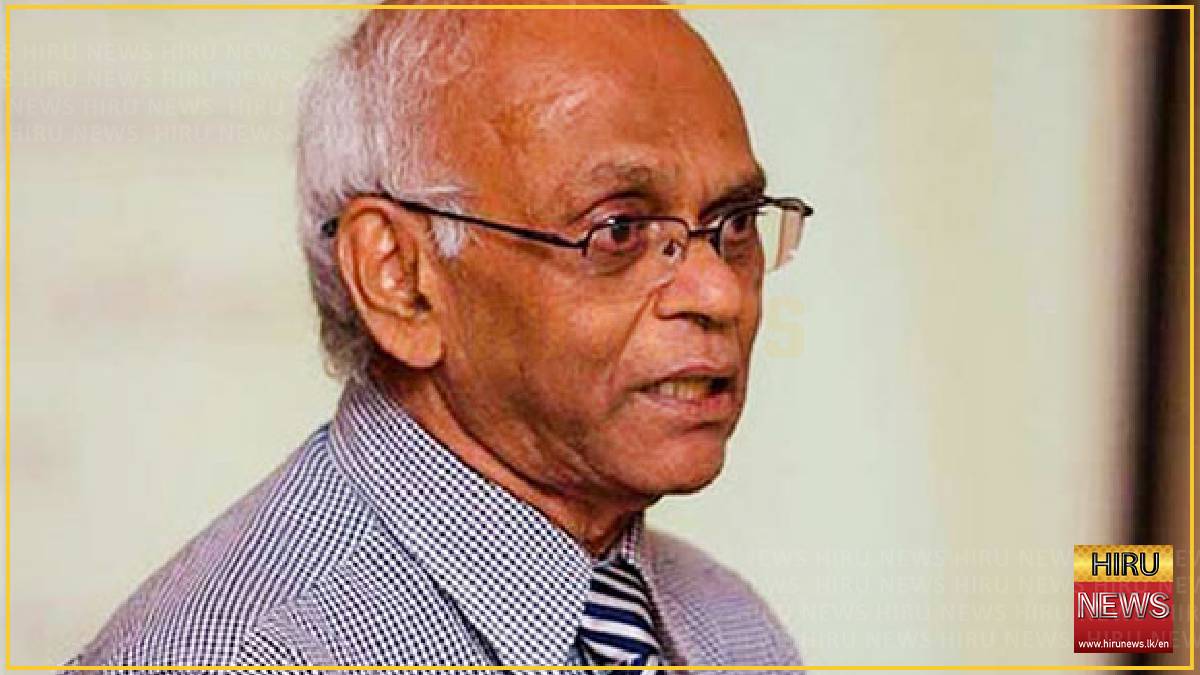
The World Bank has backed Sri Lanka’s decision to hold its headline inflation target at 5% through 2029 — and former Central Bank Deputy Governor Dr. W. A. Wijewardana has challenged the reasoning behind it, warning that persistent inflation at that level will deepen hardship for low-income households, Hiru News reported.
In its latest Development Update, the Bank supported the renewed Monetary Policy Framework Agreement signed on 1 October by President Anura Kumara Dissanayake and Central Bank Governor Dr. Nandalal Weerasinghe, which keeps the 5% target with a two-percentage-point tolerance band through 2029. Lowering the target to 2% now, the Bank argues, could undermine the Central Bank’s credibility and require sharp interest rate increases while Sri Lanka is still absorbing energy price shocks.
This is a distinct intervention from the one covered here on Friday, when the Governor made his own case for the 5% figure and called it the “optimal solution”. The Bank’s wider assessment — a 4.4% growth forecast and an uneven recovery — was reported here on 6 October.
”Wages adjust accordingly” — the flaw Wijewardana identifies
Wijewardana’s objection targets the argument that 5% inflation is neutral because wages adjust to match it. Inflation, he says, affects people differently depending on how fast their incomes rise:
- incomes rising faster than 5% — real purchasing power improves
- incomes rising at 5% — no real improvement
- incomes rising below 5% — real income falls
The burden therefore lands hardest on low-income earners and the unemployed, whose earnings may not keep pace with prices at all. A uniform target, on his account, produces a redistributive outcome rather than a neutral one.
A challenge to the unemployment figures
Wijewardana also questioned whether official unemployment data captures the problem. Under the definition used by the Department of Census and Statistics, based on International Labour Organization standards, a person counts as employed if they worked at least one hour in the preceding seven days.
The definition permits international comparison, he said, but does not show whether someone earns enough to support themselves or a family. With the average Sri Lankan household at around 3.5 people, one hour of work in a week is unlikely to cover basic living costs.
The warning
He linked the two arguments to a political risk.
“If people are unemployed and earning less income during a period when the inflation rate is 5%, a large number of disadvantaged people in the economy will have grievances against the government,” Wijewardana said.
Such grievances, he cautioned, could lead to social disorder — and Sri Lanka could ill afford a repeat of the turmoil of 2022.
Not reported
Hiru’s filing does not say where or in what form Wijewardana made these remarks, or give a date for them. It does not quote the Development Update directly or give the Bank’s inflation projections, and carries no response from the Central Bank, the Finance Ministry or the World Bank to his criticism. It gives no alternative target figure of his own.