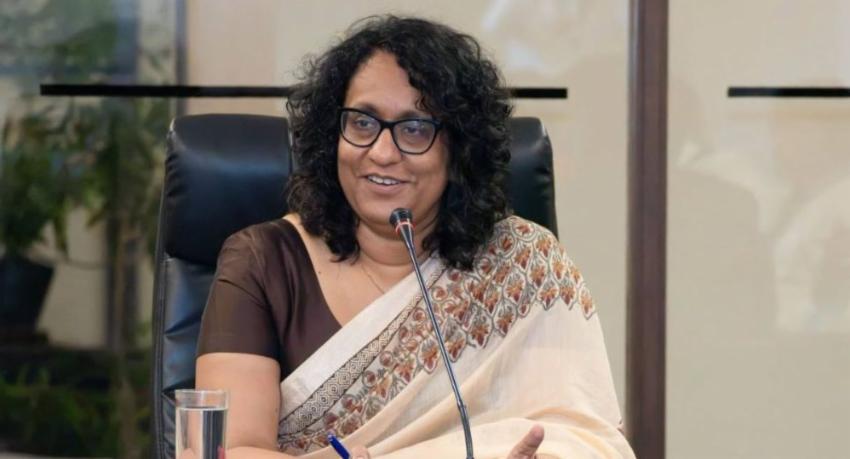
The Ministry of Environment is moving to set up a coordinated national mechanism for managing electronic waste, with plans to tighten regulations and expand collection and recycling facilities, the Daily Mirror reported on Monday.
The plan was discussed at a stakeholder consultation at the Ministry held ahead of International E-Waste Day on 14 October. Deputy Environment Minister Anton Jayakody chaired the meeting, attended by Ministry Secretary K. R. Uduwawala along with registered e-waste collectors, recyclers and other industry participants.
The Ministry framed the push as a consequence of the state’s own digitalisation: as government, education and other sectors put more electronic equipment into service, more of it eventually has to be disposed of.
What is actually proposed
Two instruments are named. The Ministry is working to introduce Extended Producer Responsibility (EPR) rules, and is separately seeking approval for a National Policy on Electrical and Electronic Waste Management. Under an EPR framework, responsibility for a product across its life cycle sits with the parties that put it on the market rather than with whoever ends up holding it.
The wider mechanism is expected to pull in ministries responsible for public administration, industry, trade, health and the digital economy, along with provincial and local government. Regulatory agencies named include the Central Environmental Authority (CEA), the Department of Imports and Exports Control, Sri Lanka Customs and the Consumer Affairs Authority.
One programme is already running: an island-wide collection effort run jointly by the CEA and Dialog Axiata PLC, using communications service centres and designated drop-off points, with material routed to registered recyclers.
The Ministry tied the effort to Sri Lanka’s target of net-zero carbon emissions by 2050.
The enabling law is already in force — the rules under it are not
The Daily Mirror describes the EPR rules as arriving “through proposed amendments to the National Environmental Act.” That framing understates how far the legislation has already travelled.
The National Environmental (Amendment) Act, No. 15 of 2026 has been law since 21 July, when the Speaker endorsed the certificate on the bill, completing its passage. The EPR provisions were part of that package: the amendments were gazetted on 22 April and submitted to Parliament on 11 May, and the EPR clause was numbered Section 23QQ.
So the amendment is not pending. What is pending is the subsidiary regulations made under it — which is the step that determines who actually pays. On the Ministry’s own account, that step has not been completed in the nearly three months since the Act took effect.
A warning already on the record about who carries the cost
Monday’s filing says the EPR framework would place “greater responsibility … on producers and other stakeholders.” That phrasing matters, because the breadth of it is precisely what drew objection while the bill was still before Parliament.
In May the Centre for Environmental Justice warned that Section 23QQ extended life-cycle responsibility beyond importers, manufacturers, vendors and handlers to consumers as well. CEJ chairman Hemantha Withanage said this converted EPR into an “Extended Producer and Consumer Responsibility” mechanism, arguing it would let corporations “escape the financial burden of collection, recycling and redesigning products.” He contrasted it with India’s 2021 EPR regulations, which bind producers, importers and brand owners and explicitly exclude consumers.
Nothing in Monday’s filing addresses that objection, and the regulations that would settle it have not been published. Whether the e-waste mechanism bills producers or households is therefore still an open question, not a settled one.
Not reported
The Daily Mirror gives no tonnage for the e-waste Sri Lanka generates annually, no figure for how much is currently collected or recycled, and no count of registered collectors and recyclers. It does not say how many collection points the CEA–Dialog programme operates, how much it has gathered, or when it began.
No timetable is given for the EPR regulations or for approval of the national policy, and no budget or funding source is identified for the national mechanism. The filing does not say whether the consultation produced any agreed position, nor what the registered recyclers in the room asked for.
This report rests on a single verified newsroom. Searches across Ada Derana, NewsFirst, EconomyNext, Hiru News, Daily FT, the Island, Daily News, Colombo Gazette, Lanka Business Online and the government news portal returned no other current filing on Monday’s consultation; results for “Sri Lanka e-waste” were dominated by editions from earlier years, which are not usable here.
Source: Daily Mirror.