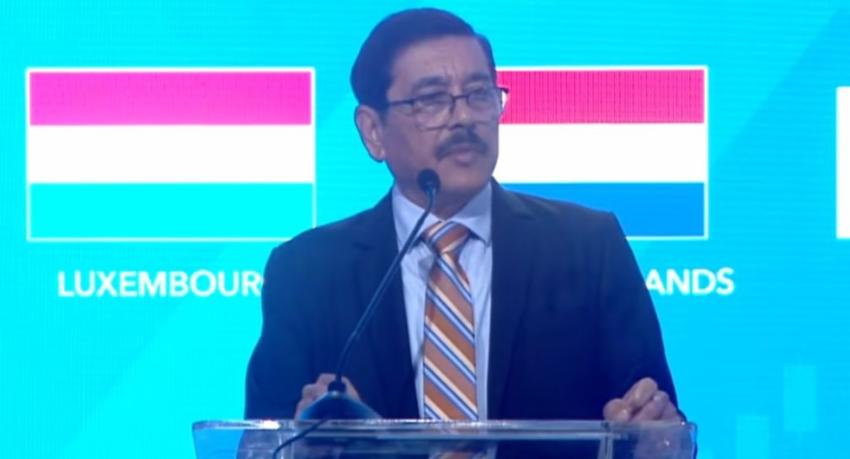
Central Bank Governor Dr. Nandalal Weerasinghe says Sri Lanka is confident of avoiding a return to the Financial Action Task Force grey list, with international evaluators beginning a two-week on-site assessment in the country this week, NewsFirst reported on Wednesday.
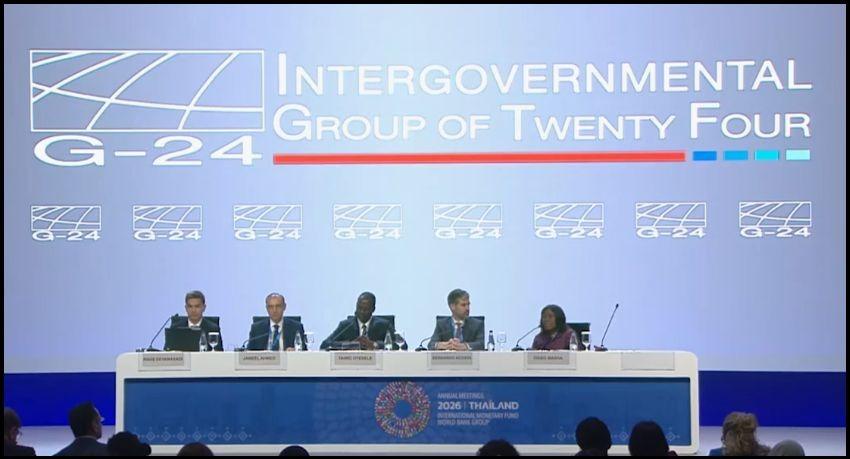
Weerasinghe was speaking at an Anti-Money Laundering and Anti-Corruption Thematic Fund event in Thailand, held on the sidelines of the IMF–World Bank Annual Meetings.
The on-site visit is the decisive stage of Sri Lanka’s third Mutual Evaluation on anti-money laundering and countering the financing of terrorism. The Governor said authorities have spent several years preparing with a single objective — that the country is not grey-listed for a third time.
The date that was missing until now
The arrival of the evaluation team is the news here. When this newsroom reported on the preparations on 4 August, the on-site visit was described only as “scheduled for this year.” It now has a window: this week, for two weeks.
That August reporting also supplies what Wednesday’s filing leaves out. The evaluation is conducted by the Asia/Pacific Group on Money Laundering, not by the FATF directly — NewsFirst refers only to “international evaluators.” It assesses Sri Lanka against the FATF’s 40 Recommendations for technical compliance, and against 11 Immediate Outcomes for effectiveness. Around 25 government institutions are involved, coordinated by the Central Bank’s Financial Intelligence Unit, with a Presidential Task Force monitoring institutional action plans.
Two previous grey listings
Weerasinghe said Sri Lanka has been grey-listed twice — first in 2014–2015, and again in 2017 — and exited by 2019, with IMF technical assistance having helped strengthen risk-assessment frameworks for licensed banks and finance companies.
He described the current evaluation as considerably more significant than those, and traced the preparation to the IMF Governance Diagnostic Assessment of 2023, which identified weaknesses in governance structures and anti-corruption systems. Sri Lanka was among the first countries in Asia to publish that report, he said, allowing stakeholders to see what reforms were required. Its findings fed national risk assessments carried out in 2024 and 2025.
The legislative record
The Governor listed the reforms enacted since: an asset-recovery framework through CLIMAC, a new Anti-Corruption Act, the Public Finance Amendment Act, revenue-administration reforms covering Customs and Excise, the National Audit Act, amendments to the Banking Act strengthening corporate governance and regulatory oversight, and amendments to the Companies Act introducing beneficial ownership requirements in line with FATF recommendations.
He also pointed to major 2026 amendments to the Financial Transactions Reporting Act, the Prevention of Money Laundering Act and the Convention on the Suppression of Terrorist Financing Act. The archive dates those precisely: all three passed Parliament on 9 July and were certified by the Speaker on 4 August, becoming the Prevention of Money Laundering (Amendment) Act No. 16 of 2026, the Financial Transactions Reporting (Amendment) Act No. 17 of 2026 and the Convention on the Suppression of Terrorist Financing (Amendment) Act No. 18 of 2026.
The test is no longer the statute book
The Governor’s most substantive point was that the legislation is not what is being assessed.
“The challenge now is to show that these laws work and that the framework is effective,” he said.
Passing laws alone is insufficient, Weerasinghe said; the evaluation places significant weight on demonstrating effectiveness in practice, and authorities are focused on proving tangible implementation across institutions and enforcement agencies. That is consistent with the structure of the assessment — the 11 Immediate Outcomes measure effect, not text — and it is the part of the exercise that a legislative programme cannot by itself satisfy.
Not reported
This is a single-source report. The Daily Mirror’s latest-news listing carried no filing on the Governor’s remarks on Wednesday, and sweeps of ft.lk’s front-page and top-story sections and of EconomyNext’s homepage returned only older editions on the grey list — reliable negatives rather than failed fetches. Ada Derana has been unreachable to this desk for twenty-five consecutive days.
NewsFirst does not give the date the on-site visit begins, name the evaluation team or its lead assessor, or say when the APG is expected to publish its findings — the timetable that determines when any listing decision would actually be taken. It does not report what specific weaknesses the 2024 and 2025 national risk assessments identified, or which of the 11 Immediate Outcomes Sri Lanka is considered weakest against.
The Governor’s confidence is an assertion by the official responsible for the preparation, not an assessment by the evaluators. No independent view of Sri Lanka’s prospects is reported, and there is no comment from the Financial Intelligence Unit, the Attorney General’s Department or the Ministry of Justice.