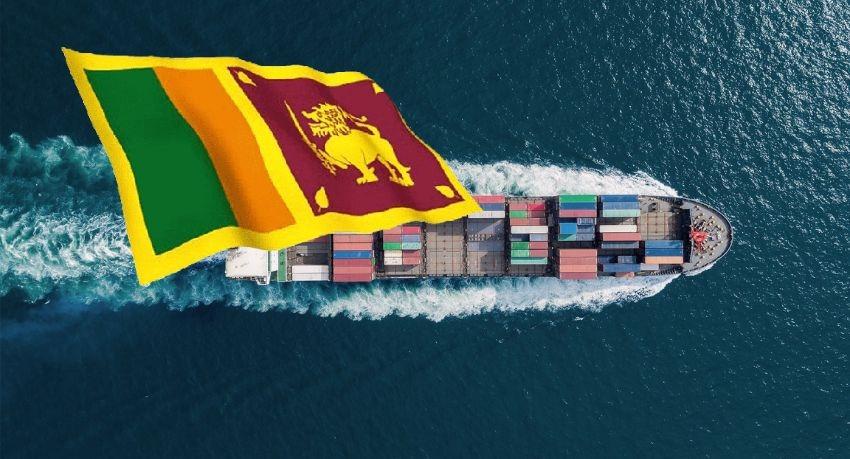
Sri Lanka has joined a global declaration that commits its signatories to oppose “unlawful fees, tolls, discriminatory restrictions, prior authorization requirements or other conditions” on ships passing through international straits, NewsFirst reported at 8.08 a.m. on Thursday.
The instrument is the “No Fees/No Tolls” Pledge, announced on 12 October by Kaja Kallas, the European Union’s High Representative for Foreign Affairs and Vice-President of the Commission. It reaffirms the United Nations Convention on the Law of the Sea and describes straits used for international navigation as “global lifelines” for trade, energy flows, supply chains and food security.
What the pledge actually commits signatories to
The declaration runs to three numbered commitments. Taken from the European External Action Service’s own published text, they are:
1. Champion multilateral cooperation. Signatories undertake to work within and support the institutions responsible for maritime governance, “particularly the International Maritime Organisation (IMO)”, and to support “ongoing defensive and non-escalatory multilateral initiatives aimed at preserving the freedom of navigation.”
2. Reject coercion and unilateral action. Signatories reject “any coercive or unilateral action seeking to undermine or circumvent the international order based on international law as reflected in the UNCLOS”.
3. Oppose measures that would hamper or impair lawful navigation. This is the operative clause, and it is worth quoting in full:
“We oppose any measures, including the imposition of unlawful fees, tolls, discriminatory restrictions, prior authorization requirements or other conditions, that would hamper or impair lawful navigation, through straits used for international navigation, or alter the existing legal framework governing the right of passage established under international law of the sea, as reflected in UNCLOS.”
The pledge names no country anywhere in its text.
Each prohibited measure matches something already on the record
That third commitment lists four categories of measure. Set against this desk’s own coverage of the Strait of Hormuz over the past six months, each of the four corresponds to a documented feature of the transit regime Iran has built there.
| Measure the pledge opposes | What our archive records |
|---|---|
| Unlawful fees and tolls | Iran’s deputy parliament speaker said in April that the first revenue from Hormuz tolls had been deposited at the Central Bank. MP Alireza Salimi said the amount varied by cargo and risk: “We determine the rules.” |
| Discriminatory restrictions | Iran’s 10-clause Hormuz management law prohibits passage of any cargo “belonging to or associated with Israel”, and bars transit for states deemed hostile to Iran. |
| Prior authorization requirements | The same law allows hostile-state transit only where the Supreme National Security Council grants an exception — passage by permission rather than by right. |
| Other conditions | The law requires nations that damaged Iran during the war to pay compensation before being permitted passage. |
That mapping is this desk’s analysis of the pledge text against its own prior reporting. No filing makes the comparison, the pledge does not mention Iran, and NewsFirst does not raise the Strait of Hormuz at all.
The correspondence is nonetheless close enough to be the point of the document. A declaration drafted in 2026 about tolls, discriminatory bans and prior authorisation on straits is describing a regime that exists, and only one such regime has been legislated.
The signatory list, and who is missing from it
The pledge is supported by all EU member states and, in the list NewsFirst publishes, 34 further countries: Australia, Bahrain, Benin, Cabo Verde, Cambodia, Cameroon, Canada, the Cook Islands, Fiji, Gabon, Guinea Bissau, Honduras, Iceland, Japan, Jordan, Kiribati, Lesotho, Liberia, Mauritania, Montenegro, New Zealand, North Macedonia, Norway, Oman, Palau, the Philippines, the Republic of Korea, São Tomé and Príncipe, Singapore, Sri Lanka, Switzerland, Turkmenistan, the United Kingdom and Yemen.
That list totals exactly 34, and with the 27 EU member states gives 61 — consistent with the EU’s own description of “more than 60 countries”. The European Union says it rallied partners “including during the UN General Assembly in September”, and the roster has been growing since the launch: Cambodia’s accession was announced separately after 12 October, and an earlier EU count put the non-EU total at 33.
Two features of the list are worth noting.
Several signatories are landlocked. Lesotho, North Macedonia and Turkmenistan have no ocean coastline. Their presence indicates a coalition assembled around a legal principle rather than around shipping interests.
The absences are larger than the presences. Neither Iran, nor China, nor India, nor the United States appears. The American absence is the conspicuous one, because the United States is the state operating the naval blockade of Hormuz — and in April the UN’s own maritime agency said that no country has a legal right to block the strait, invoking the same convention this pledge reaffirms. A declaration committing its signatories to support the IMO therefore has not been signed by the state whose blockade the IMO called unlawful. This desk is recording that absence, not interpreting it; no source explains it.
Among those that did sign, Oman and Bahrain are the notable regional names, Oman being the state that has repeatedly brokered transit arrangements with Tehran through the crisis.
Why this matters for Colombo specifically
Sri Lanka is not a bystander to the Hormuz question. It imports effectively all of its crude, refined fuel and LPG through that route. The strait’s closure has reached the domestic economy in forms as varied as fertiliser cargoes anchored off Oman and the bitumen shortage that halted road resurfacing for seven months — a shortage the Road Development Authority attributes, in a filing published the same morning as this one, to the loss of Iranian supply and the blockade of the Strait of Hormuz.
More immediately, about 20 Iranian vessels have been anchored off the island for weeks, and the pledge sits at the end of a sequence in which Colombo’s stated position and its conduct have pulled in different directions.
On 4 October, Foreign Minister Vijitha Herath denied that Washington had pressured Sri Lanka over those vessels, saying decisions are taken “while safeguarding the country’s sovereignty, independence and neutrality” and that Sri Lanka acts in accordance with UNCLOS. Government Spokesman Nalinda Jayatissa described the policy as neutral and non-aligned.
On 8 October, the Foreign Ministry told Tehran that Sri Lanka would not supply food, water or medicine to the stranded crews, and advised private firms not to either, citing exposure to United States secondary sanctions. Iran’s position was that UNCLOS, SOLAS and the Search and Rescue Convention obliged Sri Lanka to assist.
On 15 October, Sri Lanka is reported as a signatory to an EU-led declaration whose operative clause describes Iran’s transit regime in four particulars.
Each step is defensible on its own terms, and nothing in the pledge requires any action against any state. But a country that invokes UNCLOS to explain why it need not provision Iranian crews, and then signs a UNCLOS declaration whose prohibitions track Iranian law, is making choices with a direction. The filing does not address whether the government regards this as consistent with the neutrality it has asserted twice this month.
Not reported
NewsFirst does not say when Sri Lanka joined, or whether its accession is new this week or dates to the 12 October launch — which matters, because the story is filed three days after the announcement. It does not say who decided: no ministry, official or Cabinet decision is named, and there is no comment from the Foreign Ministry or any Sri Lankan official anywhere in the report.
It does not say whether the pledge carries legal force or is purely political, whether it creates any obligation on signatories to act, or what happens if a signatory does not. It does not report any Iranian response, and does not name Iran at all.
It does not address whether the commitment bears on the stranded Iranian vessels, on Sri Lanka’s declared neutrality, or on the government’s handling of US sanctions exposure. And it gives no indication whether Sri Lanka sought to join or was invited.
A note on sourcing
This account rests on a single verified newsroom. NewsFirst filed it at 8.08 a.m. on Thursday under the byline of Zulfick Farzan, and a domain-restricted search of Ada Derana, the Daily Mirror, EconomyNext, Daily FT, the Island, Hiru, Colombo Gazette, news.lk and the Sunday Times returned no Sri Lankan coverage of the pledge whatever. A check of the Daily Mirror’s breaking-news listing the same morning returned nothing on it.
The pledge text, the 12 October date, the identification of Kaja Kallas and the “more than 60 countries” figure are taken from the European External Action Service’s own published statement, which carries the declaration in full. The EEAS is a primary source rather than a newsroom and does not count toward this article’s source rating. Where this article quotes the pledge, it quotes that text; where it describes Iran’s Hormuz law and toll collection, it relies on this desk’s earlier reporting, cited inline above.
Source: NewsFirst.