Brent crude touched $110 a barrel on Friday for the first time since May, as attacks on shipping around the Strait of Hormuz intensified and traders weighed how much diesel Russia can still supply.
Brent futures settled $3.94, or 3.7%, higher at $109.86 — the highest close since May 19 — while US West Texas Intermediate rose $3.44, or 3.5%, to $101.41, its highest since September 17, the Daily Mirror reported on Saturday, carrying Reuters copy. Over the week Brent gained 4.9% and WTI 10.4%.
The immediate trigger was a missile. A Saudi-led coalition said it intercepted and destroyed a ballistic missile launched towards Yanbu, the Red Sea port that is central to Saudi Arabia’s ability to move oil without passing through the Strait of Hormuz. Consultants Rapidan Energy Group said initial reports indicated no damage to the port’s infrastructure.
Prices rose anyway, which is the point: the market reacted to the threat to the bypass route rather than to any actual loss of capacity.
Research firm Energy Aspects said WTI and Brent “reversed earlier losses as escalation fears resurfaced amid rumours of attacks on Saudi energy infrastructure.” It added that Israeli reports suggested Iran might be preparing a pre-emptive strike after unusual military movements were detected by Western intelligence — while stating plainly that those reports are unverified. This article repeats that assessment with the same caveat attached.
The flow data undercuts the control claim
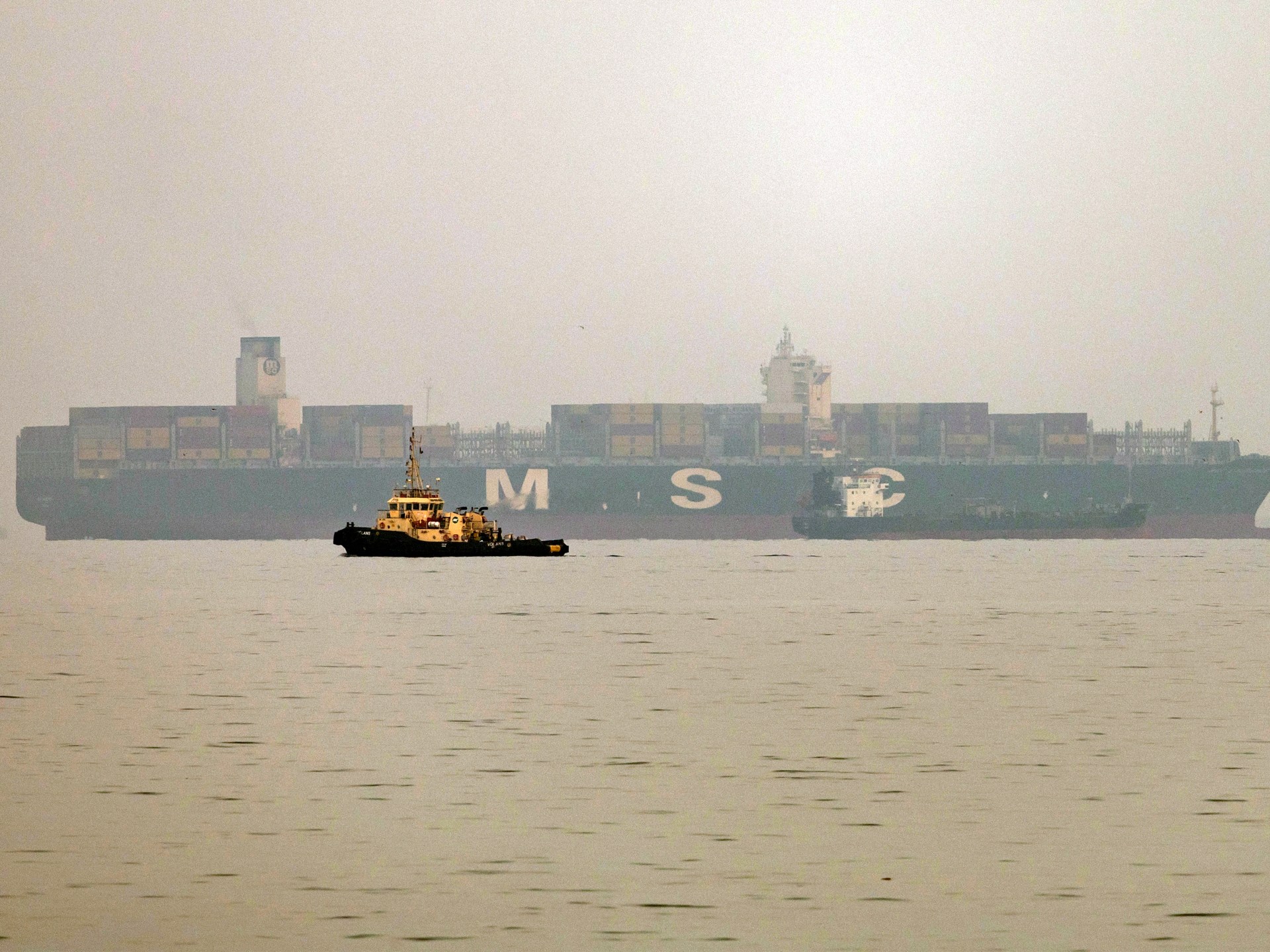
Attacks around the Strait have surged over the past ten days, with Iran saying it is stepping up strikes in response to the US blockade of its ports and the tougher sanctions introduced last month. Analysts at Kpler said “intensified Iranian attacks drove Gulf crude flows sharply lower,” and expected a slower and more uneven recovery without a comprehensive political deal.
Al Jazeera reported the same day that the United States and Iran are each claiming control of the waterway. CENTCOM commander Brad Cooper said “the Strait of Hormuz is controlled by the United States and our regional partners, not Iran.” Tehran says Washington is exaggerating its numbers.
The figures in that report do not sit comfortably together, and the arithmetic is worth doing.
- Crude flows through the Strait ran at 11.6 million barrels per day over the seven days to October 13 — roughly 68% of the pre-war baseline of 17.1 million bpd.
- The US said 400 ships and 100 million barrels of oil moved through the Strait over the past week.
- Tracked transits for the week were 125 outbound and 129 inbound vessels.
At 11.6 million bpd, a seven-day total comes to about 81 million barrels, not 100 million — the US figure is roughly a quarter higher. The tracked transits sum to 254 ships against the 400 claimed. Al Jazeera presents the American numbers as US claims, set against separately tracked data; the gap between them is this desk’s calculation, not a figure either party has published.
Either way, a third of the Strait’s pre-war crude movement is not getting through.
At least 12 ships were attacked in the week ending October 16 — one sank, two were disabled, three were damaged or had unconfirmed outcomes, and six continued to port. The UK Maritime Trade Operations body notes that many vessels decline to report attacks, so the real figure is higher. One new method was recorded: a rocket-propelled grenade fired from a small boat struck a tanker 78 nautical miles north-east of Jubail.
Russia, and the supply response
The second factor is diesel. Ukraine struck a Russian oil refinery on Thursday after President Volodymyr Zelenskiy said Kyiv was abandoning a ceasefire covering energy sites that had been announced by US President Donald Trump, and criticised Trump’s willingness to strike deals with Moscow. Russia’s Ryazan refinery suspended operations at a primary crude distillation unit after a drone attack, two industry sources told Reuters.
“Conflict in the Middle East still keeps coming back and I think it’s questionable how much diesel fuel Russia can actually deliver to the markets,” said Dennis Kissler of BOK Financial. “Those two factors are just continuing to have traders be buyers.”
Governments are releasing stock against it. The International Energy Agency agreed on Thursday to release more than 20 million barrels of fuel, and the US Department of Energy issued a request for proposal on Friday for an exchange of up to 17 million barrels from the Strategic Petroleum Reserve. Those are increments on a much larger existing commitment: Washington has already agreed to loan 172 million barrels from the SPR as part of a deal with about 30 IEA countries to release 400 million barrels worldwide.
The releases have not held the price down.
What it means for Sri Lanka
Sri Lanka imports virtually all of its crude and refined fuel, so the level matters directly to the import bill, to the rupee and to Ceylon Petroleum Corporation pricing.
The $110 print is the highest this year on our records. When oil first passed $100 on the Iran blockade in April, analysts warned of $150 if the Houthis were to close Bab al-Mandeb — a threshold that remains well above Friday’s close. On 8 October Iran warned it would block unauthorised Hormuz routes as tanker attacks mounted, and the attack data above is the continuation of that.
Domestically, the Energy Minister has spent the month managing supply expectations rather than prices. He told the public on 5 October there was no impending shortage and not to panic-buy, queues eased the following day, and on 11 October the CPC was authorised to open 75 new fuel stations, with private suppliers free to set their own prices but warned against restricting supply to force a rise.
Not reported
No Sri Lankan official has commented on Friday’s move, and no filing says whether it will feed into the next CPC price revision or what crude price the current retail prices assume. Nothing establishes the cost of Sri Lanka’s most recent cargoes or the government’s hedging position, if any.
Ada Derana also carried the Reuters report, but the site has been unreachable from this desk for four weeks and its publication date could not be verified, so it is not cited here.