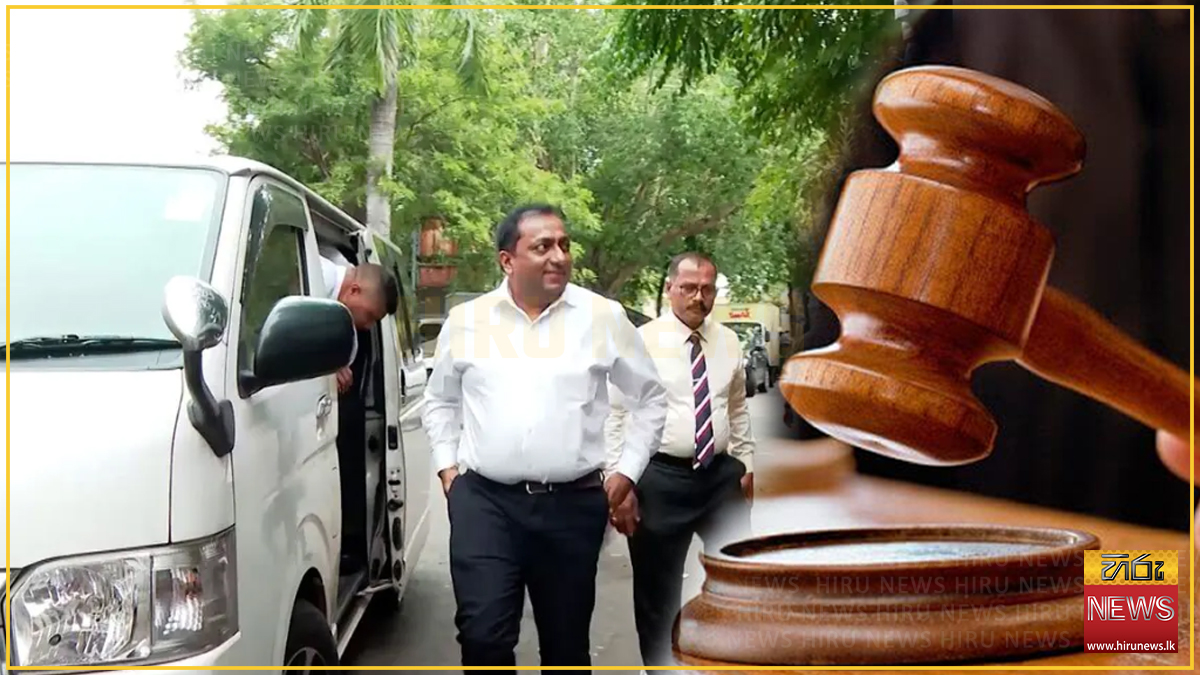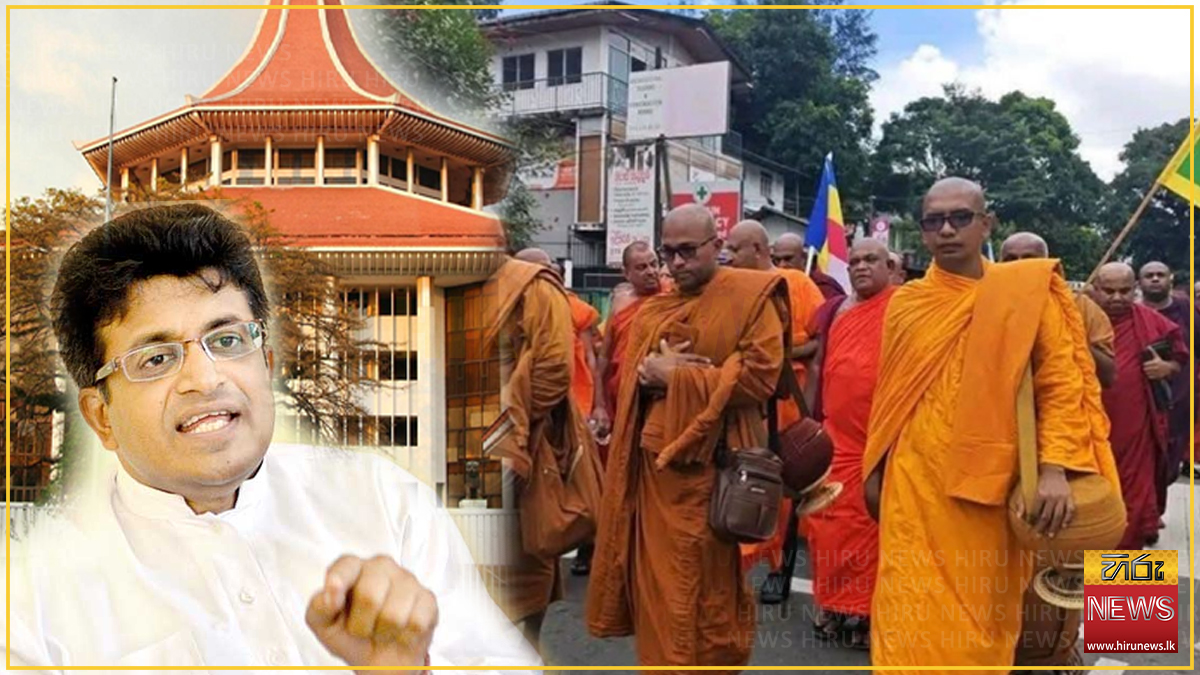
Former minister Udaya Gammanpila has filed a writ petition in the Court of Appeal seeking to quash the Fort Magistrate’s Court order that barred the “Justice for the Robe” protest from Colombo Fort, arguing in part that the same roads were later made available to a pro-government demonstration.
The petition was filed on Monday, Hiru News reported at 8.35 p.m.
The order under challenge was obtained by Fort Police under section 106 of the Code of Criminal Procedure, and blocked protests in the Fort area by monks and lay supporters demanding that Ven. Galagoda Aththe Gnanasara Thera’s robe not be removed and that he be pardoned and released.
Named as respondents are the Officer-in-Charge of the Fort Police Station, the Inspector General of Police, the Attorney General and the Colombo Fort Magistrate.
The grounds
Gammanpila’s petition argues that:
- the protest campaign caused no road obstruction and no public inconvenience
- the respondents later gave protesters loyal to the government the opportunity to hold a demonstration on the same roads covered by the order
- the order restricts the freedom of expression and freedom of assembly guaranteed by the Constitution
- the respondents obtained it by placing incorrect information before the court
He asks for a writ nullifying the order, and for an interim order suspending its operation until the petition is finally determined.
This desk recorded the counter-protest before the petition alleged it
The second ground is the one that can be checked against the record, and it holds up.
The order was made on 16 October, when Fort Magistrate Pasan Amarasena barred campaigners from the area around the Presidential Secretariat under section 106(1), a public-nuisance removal provision, in a high security zone.
On 17 October — the next day — this desk reported that the Janawarame Purawasiyo march reached the Presidential Secretariat, with a delegation received inside by officials. That article noted at the time that a counter-mobilisation had been granted access to the building a court had just closed to its opponents, and that no filing said so.
Gammanpila’s petition is the first document to put that contrast before a court. The archive did not need the petition to see it, and the petition is not evidence that the allegation is correct — but the sequence it describes is one this desk independently recorded two days before the filing.
A headcount that does not match the record
The petition states that 53 persons were named as respondents in the original magistrate’s order, among them monks, members of parliament and civil society activists.
This archive’s figure for that order is 54, and it was not arrived at casually. Three newsrooms gave 54; the Daily Mirror contradicted itself between 54 and 55 in consecutive sentences of one filing; and NewsFirst’s published category breakdown reconciled to 54 only when the components were tested against the agreed total.
The 53 in the petition is therefore a fourth figure, and it is not resolved here. There is a plausible reason the numbers could differ without either being wrong: “respondents named in the police application” and “persons covered by the order” are different legal categories, and a court need not bar exactly the set of people named before it. But no filing states that distinction, and this article does not adopt it as the explanation. The gap stands open.
Ada Derana has covered this and cannot be read
Ada Derana filed its own report on the petition, at adaderana.lk/news/250196. The site has returned a CloudFront 403 to this desk for 31 consecutive days, on every route tried. Its filing is therefore recorded here as existing and uncited — a verified newsroom has covered the story, and the block, not an editorial judgement, is why it does not appear in the source list.
No other verified Sri Lankan newsroom had filed on the petition at the time of writing, which leaves this a single-source report.
Context
Gnanasara Thera was returned to prison after the Supreme Court invalidated his presidential pardon in September. On the same day as this petition, former President Maithripala Sirisena — who signed that pardon — apologised to the Maha Sangha for the missing ministry approval the court identified. The government has ruled out a fresh pardon.
Gammanpila is separately a respondent in contempt proceedings before a three-judge Court of Appeal bench, a distinct matter from this petition.
Not reported
The filing does not say when the petition will be supported, whether the Court of Appeal has fixed a date, or whether Gammanpila was himself among those named in the magistrate’s order. It gives no response from the police, the Attorney General or the court, and does not say on whose behalf, besides his own, he brings the application.
Sources: Hiru News.